
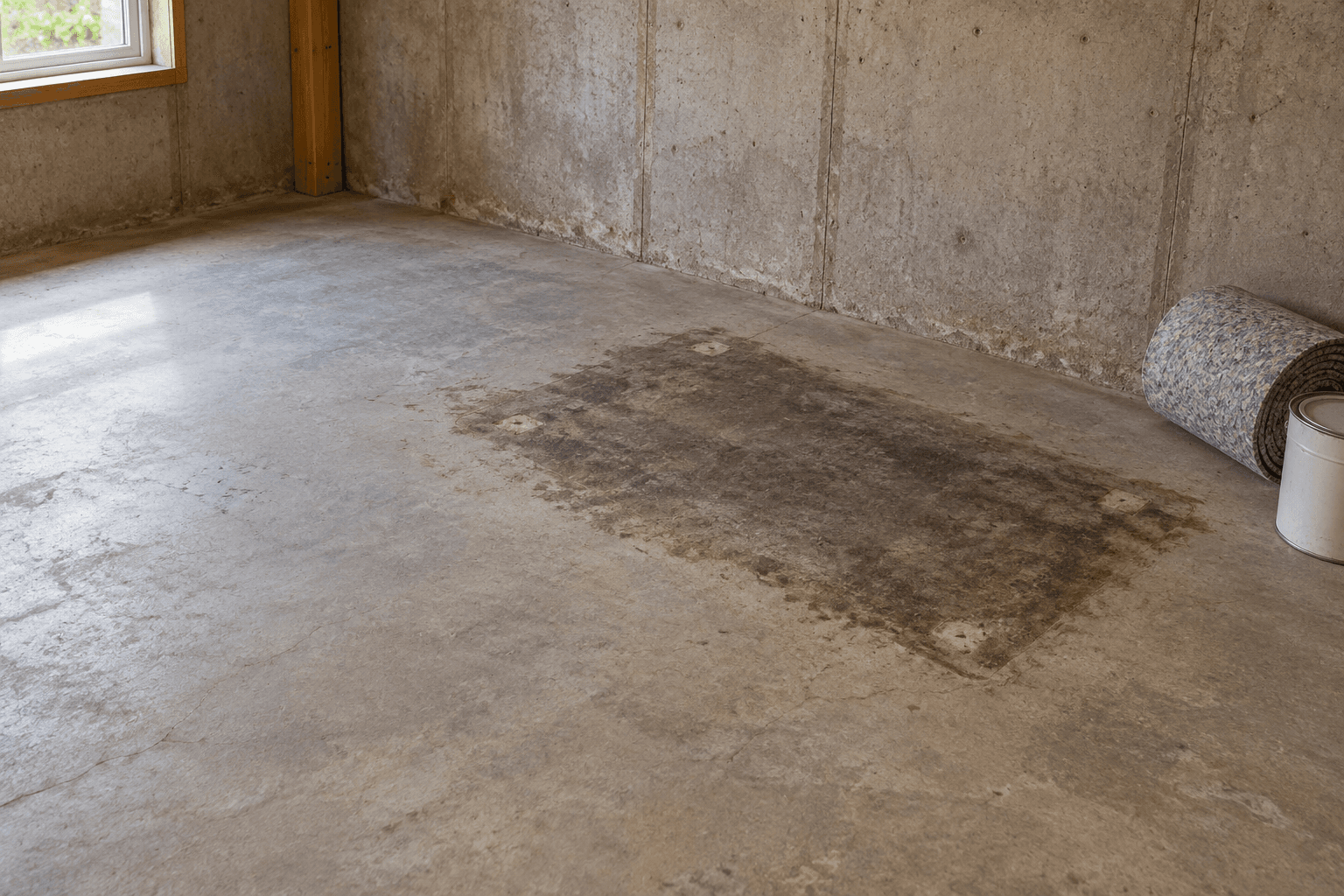
Usually not as a fix on its own. A coating laid over concrete that still holds heating oil can fail to bond, and Oregon DEQ treats floor sealing as a short-term or supporting measure rather than a standalone answer to vapor problems. Before anyone grinds, coats or covers a stained slab, find out how deep the oil goes and what lies beneath it.
The order that protects you is assessment, then remediation, then a written agreement that the remediation is complete, and only then the floor finish. Reversing that order can leave contamination under a new floor that is expensive to lift.
Get an oil-stained slab assessed before refinishing
Describe the stained area, attach photos and earlier reports, and say what floor finish you plan when requesting a quote. Ask which assessment and remediation work the quote covers and which needs a concrete specialist.
Why a Coating Is Not a Cleanup
DEQ's vapor intrusion guidance, updated in March 2025, discusses epoxy and elastomeric polymer floor coatings on existing slabs, including flooring affected by chemical spills. It says product specifications should be checked for bonding and chemical compatibility. It also says sealing can improve indoor air quality but is generally not a standalone approach, because sealants can degrade and new openings can develop. DEQ describes sealing as a short-term measure or an enhancement to a wider mitigation approach.
EPA research coverage points the same way. An EPA research update on vapor intrusion from June 2023 says sealing visible cracks with epoxy typically only helps part of the problem and may be temporarily effective. If the worry is the air in the house, that is a separate assessment, and its results should inform any decision about the floor.
Oil in Concrete Is a Bonding Problem Too
Floor finishes need a sound, clean surface. A federal construction specification for fuel-resistant resinous flooring, UFGS 09 67 23.15, recommends a concrete condition assessment before installation to avoid premature failures from coating concrete with high levels of surface contamination such as oils and fuels. It describes that system as suited to concrete with fuel or oil contamination no deeper than a quarter inch.
That specification is written for military facilities, not homes, and it is not an environmental standard. It still makes a useful point for a Salem basement. Grinding removes the surface, but oil that has soaked deeper into the slab, collected in joints or reached the soil below is untouched. The depth of the oil decides whether grinding, coating or replacement is even realistic.
What a Material Assessment Should Answer
Ask an environmental professional, working with a concrete or building specialist where needed, to assess the slab itself rather than the stain on top of it. Agree in writing which questions the assessment will answer.
- Extent: how far the staining and oil reach across the floor, including under walls, stairs and fixtures.
- Depth: how deep oil has penetrated the concrete, and how that was determined.
- Pathways: cracks, joints, floor drains and penetrations where oil may have passed through the slab.
- Below the slab: whether the soil underneath needs its own investigation, which is a separate question from the concrete.
- Options: which approaches fit the findings, such as cleaning, surface removal or removing and replacing sections, with the reasons for each.
- Air: whether any indoor air concern needs its own assessment before the floor decision is made.
If the tank sat in the basement, the basement tank removal and the slab assessment should be scoped together, so the crew that removes the tank does not leave the floor question for later. Soil beneath a building is a wider heating oil cleanup question, and the slab decision should wait for its answer.
Cleaning, Grinding, Coating and Replacement Compared
Owners often ask which of these approaches works. Each answers a different part of the problem, and the assessment findings decide which ones are worth discussing for a particular floor.
- Cleaning: deals with residue on the surface. It does not reach oil that has soaked into the pores of the concrete.
- Grinding or other surface removal: takes off a layer of concrete. It can only help where the oil is shallow, and the dust and debris it produces are part of the cleanup waste.
- Coating or sealing: covers the surface and may reduce contact or odor for a time. It leaves the oil in place, depends on a sound bond, and DEQ does not treat it as a standalone fix for vapor.
- Removing and replacing sections: takes the affected concrete away and opens access to the soil below. It is the most disruptive option and needs structural, dust and disposal planning.
A provider who recommends one approach before anyone has assessed the slab is guessing. Ask for the reasons behind the recommendation and what result would show it worked, and compare those answers rather than the price of the coating or the patch alone.
When Sections of Slab Come Out
Where the assessment points to removal, ask how the concrete will be cut, how dust will be controlled while people live in the house, and where the removed material will go. DEQ's spill fact sheet says cleanup materials go to an approved facility, so keep the disposal receipts with the rest of the file.
Ask, too, what goes back. A replacement section needs a detail that suits the floor's use. Where vapor is a concern, DEQ's guidance says slab removed for mitigation work is preferably restored with an underlying vapor barrier. Restoration of a basement floor after a tank comes out is a structural repair as well as an environmental one, and the floor slab patch detail belongs in the quote before work starts.
Agreeing When the Work Is Finished
Before a flooring contractor is booked, ask the environmental professional to state in writing what was removed or treated, how the result was checked, what remains and whether any condition applies to the floor. That statement is the handoff to the flooring installer, and it should be specific enough that someone reading it years later understands what lies beneath the finish. If the work is staged, for example because soil beneath the slab is still under investigation, ask for an interim statement that separates what is finished from what is not, and do not let a temporary covering be described as the final floor.
Give the flooring installer the statement and ask them to confirm the product's surface preparation requirements in writing, including any limits on contamination and moisture. If the installer or manufacturer will not accept the slab as described, settle that before the finish goes down rather than after it fails.
Material Assessment and Finishing Handoff Checklist
An illustrative handoff sheet could cover the items below. It does not describe a real property or a required standard.
- Source: when and how the oil reached the floor, and when the source was stopped.
- Assessment: who assessed the slab, the method used and the findings on extent and depth.
- Remediation: what was cleaned, removed or replaced, with photos, drawings and disposal records.
- Completion: the written statement that remediation is finished, by whom and with what limits.
- Related work: the status of any soil, air or drain investigation that could affect the floor.
- Finish: the flooring product, the installer's preparation requirements and confirmation that the slab meets them.
Keep the sheet with the tank records. If you are planning a wider remodel, add any old oil lines found in walls or floors to the same sheet so one set of records covers the basement.
Requesting a Quote for the Floor
When you request a quote for oil cleanup and testing, describe the stained area, attach photos and any earlier reports, and say what finish you plan. Ask the provider which parts of the assessment and remediation it handles directly, and which need a concrete specialist or another professional.