Yes. Chemicals from a heating oil leak can move through the ground as vapor and enter a home. Environmental professionals call this vapor intrusion. For a Salem homeowner, the next question is whether that pathway exists at the property and what evidence an assessor needs to evaluate it. A soil laboratory report alone does not measure the air you breathe indoors.
Tell your environmental professional about an indoor fuel odor, a known leak near the house or contaminated soil left beside a foundation. Ask them to review the building and the existing investigation together. If there is an immediate danger, leave the affected area and call emergency services from a safe location. If someone feels unwell after a suspected exposure, seek medical advice rather than waiting for an environmental report.
How an underground leak can reach indoor air
EPA's explanation of vapor intrusion describes chemicals moving from subsurface sources into buildings. Foundation cracks and openings around utility lines can provide entry routes. The existence of a tank or a crack does not, by itself, establish that this is happening in your home. An assessor needs to connect the suspected source, the possible route and the indoor space.
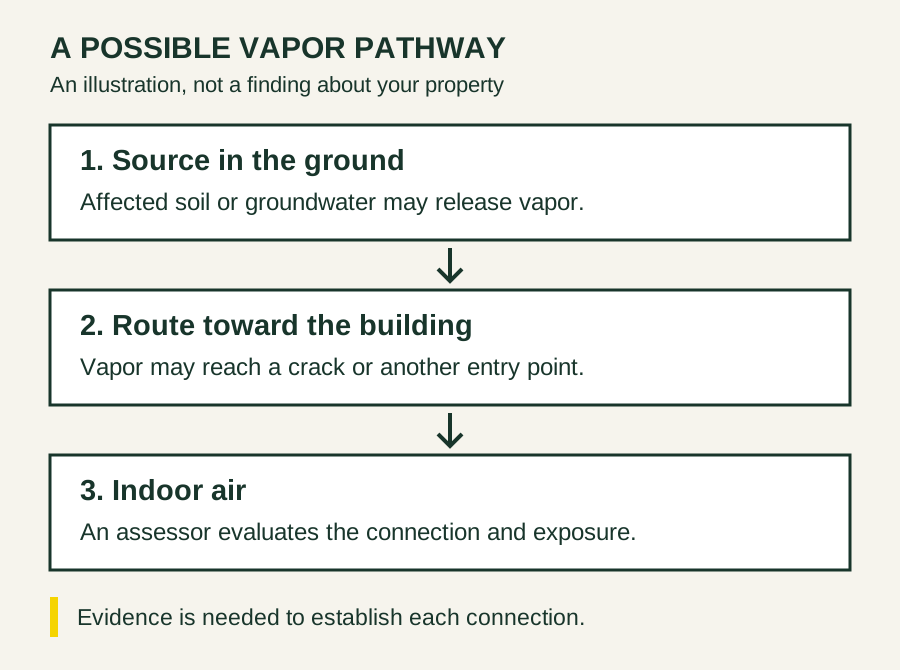
The Agency for Toxic Substances and Disease Registry explains in its fuel oils profile that some fuel components evaporate while others can remain associated with soil or water. It also identifies movement of fuel-oil vapor through soil into basements as a possible exposure route. Removing the metal tank and evaluating that route are separate parts of understanding a former leak.
Ask the assessor to show the suspected route on a sketch of your property. It should identify what they know and where they still need evidence. For example, an old report might locate contaminated soil beside the house without describing the foundation or testing the air. Give the professional the complete report so they can explain whether its scope addressed the concern you have today.
// Featured service
Soil Testing & Contamination Cleanup
Soil testing to find out whether a heating oil tank leaked, and cleanup when it did. Samples go to an accredited lab for diesel-range hydrocarbons; a confirmed release is reported to DEQ and cleaned up under the route the site qualifies for, through to a closed DEQ file.
Discuss the Oregon heating oil tank guidance
Oregon DEQ's vapor assessment guidance, updated in March 2025, includes a dedicated heating oil tank appendix. It considers the relationship between contamination and the building, including direct contact and routes that can carry vapors toward a structure. It also distinguishes soil-vapor investigation from indoor-air assessment. The guidance does not impose the same testing sequence on every heating oil tank project.
Ask your provider which part of that guidance they are using and how the property's evidence supports the proposed approach. A useful answer connects the recommendation to the location of contamination, the building and any earlier investigation. If someone recommends no further air assessment, request the basis in writing. If they recommend testing, ask which uncertainty it is intended to resolve.
Bring any earlier DEQ correspondence to this discussion. Ask the provider to distinguish an unresolved concern from a question that the previous investigation already addressed. Do not assume that an older file is inadequate merely because a newer guidance document exists. Equally, give the professional any new information, such as a later spill, building alteration or change in how you use the lowest floor.
Clarify what each proposed test measures
When you receive a proposal, identify the material or air space the provider intends to sample. Similar-sounding test names can conceal different scopes. Use these distinctions to ask for an explanation, leaving sample placement, collection methods and interpretation to the professional.
- Soil sampling measures specified substances in collected soil. Ask how those findings inform the separate indoor-air question.
- Soil-vapor sampling examines gas in the ground. Sub-slab sampling examines vapor beneath a building's slab, not the air inside a room.
- Indoor-air sampling measures specified chemicals in air collected within the building over a stated period.
- Outdoor-air sampling can help the assessor consider surrounding air sources when interpreting indoor findings. Ask how they will use the comparison.
DEQ discusses background sources and changes in conditions over time when evaluating air data. Ask the provider how the sampling period, weather and building operation fit the question they need to answer. Have them explain whether they expect a single visit to provide enough evidence or whether a follow-up decision depends on the first results. A booked sampling visit does not guarantee a particular conclusion.
If your earlier inspection concerned tank integrity, bring that scope too. Our tank testing comparison explains the difference between testing a tank and investigating the surrounding ground. An integrity result should not be described as an indoor-air assessment. Ask the person summarizing the file to identify the document behind each conclusion.
Prepare a building and activity record
Before the visit, prepare a short timeline of the concern. Note when you first noticed it, which rooms were involved and whether it followed fuel delivery, tank work or another change. Describe what you observed without trying to diagnose the source. If the concern comes from a report rather than an odor, identify the page or sample result you want the assessor to explain.
EPA identifies household products such as solvents, gasoline and cleaners as potential indoor sources of some of the same chemicals involved in vapor intrusion. Tell the assessor about stored products and recent painting, cleaning or maintenance. Ask for written preparation instructions before a sampling visit. Do not change the house's operation simply to obtain a more reassuring reading; discuss any necessary changes with the person designing the assessment.
- Property layout: provide an existing tank-location sketch, the floor plan if available, and photographs of accessible basement or crawlspace areas.
- Project history: gather leak reports, removal records, soil results and any previous air or vapor findings, including their dates.
- Building use: describe which lower-level rooms people occupy and any planned conversion of storage space into living space.
- Recent activity: list repairs, painting, fuel handling and changes to heating or ventilation for the assessor to consider.
Keep observations dated and separate from other people's recollections. A note saying that a relative remembers an odor years ago is useful context, but it should not appear as a measured exposure in the project summary. You do not need to produce a technical site model yourself. Your contribution is a record the professional can question, check and build on.
Questions to include in the assessment request
Send these questions with your records when asking for a proposal. They help define the work and deliverables; they are not a sampling protocol or a way to decide whether a building is safe to occupy.
- Experience: Who will design and interpret the vapor or indoor-air assessment, and what experience do they have with heating oil sites?
- Source and route: What evidence connects the suspected contamination to this building, and which connections remain uncertain?
- Scope: Which spaces or materials will you assess, which chemicals will the laboratory analyze, and what areas are excluded?
- Preparation: What should occupants document or do before and during the visit, and who answers questions about those instructions?
- Results: Will you provide locations, dates, laboratory attachments and an explanation of how the findings answer the agreed question?
- Follow-up: Who will explain any immediate concerns, discuss the findings with DEQ where needed, and propose further work?
For an illustrative example, a homeowner receives a quote labeled air testing but cannot tell whether it includes indoor air or only soil vapor outside the house. Before accepting it, the owner asks for the locations and purpose of each sample. The provider can then clarify what the quoted work addresses and whether another assessment is needed. That conversation prevents both parties from relying on different meanings of the same phrase.
Review the findings before deciding on further work
Ask the assessor to explain the findings alongside the scope you agreed on. Locate each sample on the sketch and ask about any changes made during the visit. If the report uses a screening value or risk-based concentration, have the professional identify its source, the material it applies to and the assumptions behind the comparison. Avoid transferring a number from a soil table into an air discussion.
Request a clear statement of unresolved questions. You should be able to distinguish a recommendation for additional evidence from a recommendation for corrective work. If the provider proposes a response, ask what it is intended to address and how they would check its effectiveness. Our soil cleanup guide covers the broader cleanup discussion; the air assessment should explain the building-related concern within that project.
If you are just beginning to investigate a confirmed release, our contamination next steps article explains the broader project sequence. Keep the air findings with that file, including any follow-up correspondence. Ask who should receive updates if you later remodel the lower floor or change the use of a room mentioned in the assessment.
When making a soil testing and cleanup inquiry in Salem, state that your concern includes indoor air. Provide the existing records and ask whether the proposed team can assess that concern or needs a vapor-intrusion specialist. Request a scope that names the question, the responsible professional and the written findings you will receive.