If you have an old heating oil tank in your Salem yard or basement, the single question that decides everything else is whether oil has leaked into the soil around it. You cannot tell by looking. A tank can sit quietly for decades and still have weeped fuel from a seam or a corroded base, and the only way to know for certain is to test the soil. This guide explains what that testing looks for, how the samples are taken and read, and what the results mean for your property.
Why a visual check is not enough
A decommissioned or abandoned tank that looks fine from the outside tells you nothing about what is in the ground beneath it. Heating oil is a low-volatility fuel: it does not evaporate away, it binds to soil and can stay there for years. That is why a soil test, not an inspection of the tank itself, is the step that confirms whether you have a clean site or a release. In Oregon, the cleanup of any release is overseen by the DEQ Heating Oil Tank program, which sets the standards a site has to meet to be signed off.
// Featured service
Underground Oil Tank Removal
Full decommissioning of buried heating oil tanks (USTs) in Salem under the Oregon DEQ HOT program. We locate, pump, cut, lift, and document, closing with a signed Decommissioning Report and lab-tested soil samples for the property file.
What the lab is actually measuring
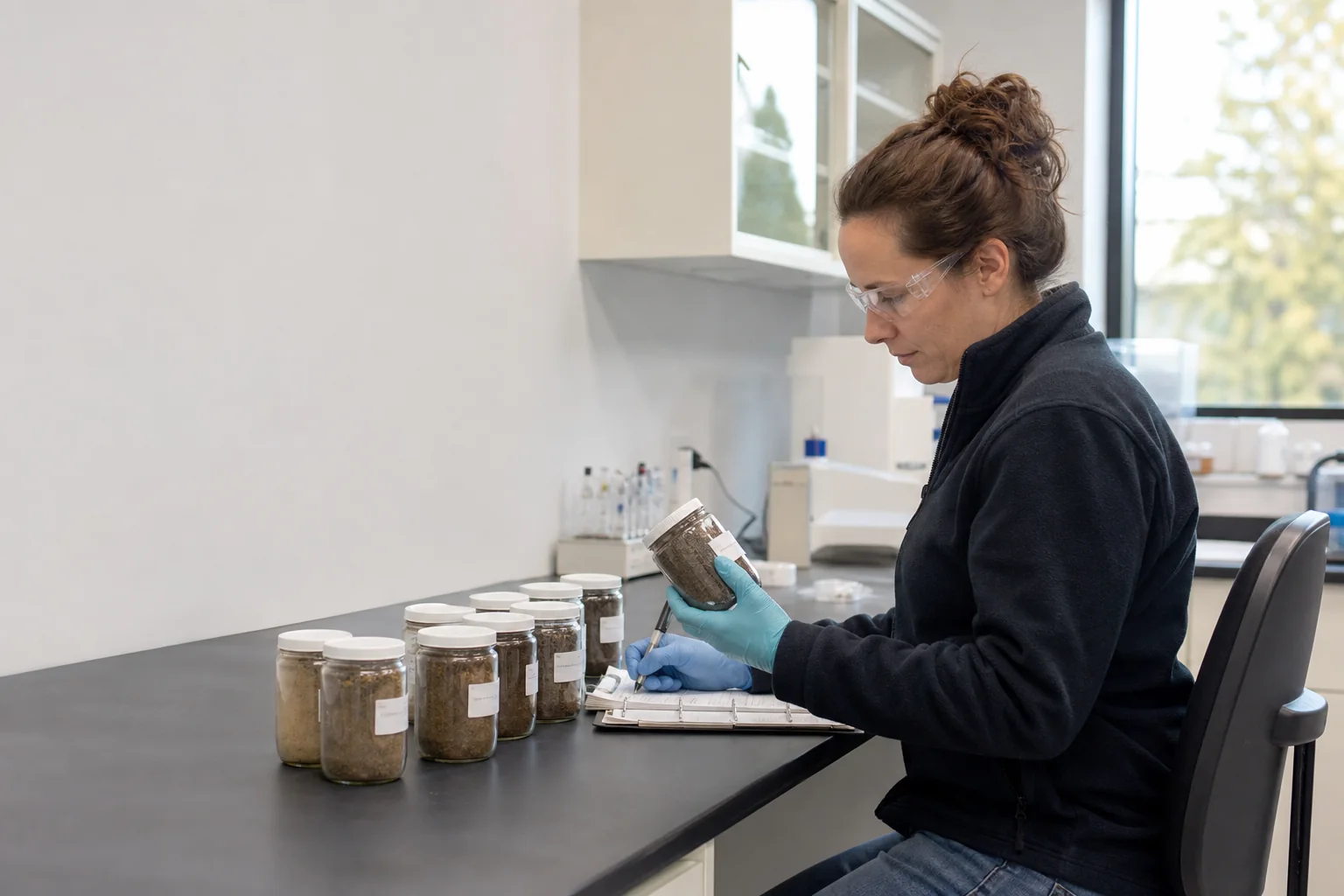
Soil samples taken from around and beneath the tank are sent to a state-certified laboratory, which keeps the result independent of whoever is doing the work. The headline measurement is total petroleum hydrocarbons, or TPH, the overall amount of oil-derived compounds in the soil. For heating oil the lab runs a diesel-range analysis, because heating oil sits in that heavier range rather than the lighter gasoline range. The result comes back as a concentration, usually in milligrams per kilogram, that can be compared against the level Oregon treats as clean.
Alongside TPH, testing often looks at a set of specific compounds known as BTEX, benzene, toluene, ethylbenzene and xylene, which are the more mobile and more toxic parts of a petroleum release. Both matter because a site can pass on bulk TPH but still carry a compound of concern, or the reverse. The Interstate Technology and Regulatory Council's guidance on evaluating petroleum risk explains why TPH is assessed as a range of fractions rather than a single number, which is the science behind how your results are judged.
How the samples are taken
Where the samples come from matters as much as the numbers. A service provider takes soil from the points most likely to show a release: directly beneath the tank, around its fill and vent lines, and at the depth where leaked oil would have settled. For a tank being dug out, samples are usually taken from the floor and walls of the excavation once the tank is gone. The aim is to characterize the worst of the contamination, not the cleanest corner, so the result reflects the real condition of the site.
This is also why testing is best done by a licensed provider rather than improvised. The placement and number of samples, the chain of custody to the lab, and the documentation all have to hold up if the result is ever relied on by a buyer, a lender, or DEQ.
Reading the result against Oregon cleanup levels
A lab number on its own means little until it is compared to the concentration Oregon considers protective. If your soil sits below that level, the site is clean and can be documented as such. If it sits above, you have a confirmed release, and the soil that exceeds the level generally has to be removed or otherwise cleaned up until a follow-up test comes back under the threshold. The gap between your result and the cleanup level is, in practice, what determines the size and the cost of the job.
Because heating oil releases vary so much, two tanks a street apart in Salem can produce completely different outcomes, one clean and one needing a dig-out. That is exactly why the test exists: it replaces guesswork with a number you can act on.
What a clean result is worth
A documented clean soil test is an asset, not just a relief. It is the evidence a buyer's lender or a title company will ask for, and it closes off the open question that an unknown tank otherwise leaves hanging over a sale. If your test does show a release, the same documentation, done properly, is what later proves the cleanup was completed to standard. Either way the testing is the foundation everything else rests on, which is why our guide to whether a buried Salem tank is leaking and the wider oil tank soil contamination overview both start here.
If you have an unknown or aging oil tank on your Salem property and want to know what is in the soil around it, use the form on this page for a fixed-price quote on testing and, if it is needed, cleanup from a licensed Oregon provider.