If you have found small capped wells in the yard of a Salem home with a heating oil cleanup in its past, do not pull, uncap or fill them yourself. Find out first why they were installed and whether anyone still expects them to be sampled. When the answer is that monitoring has ended, retiring the wells is regulated work for a licensed monitoring well constructor.
The order matters. A well that is still part of an open cleanup cannot simply be removed, and a well retired without the right records can leave questions in the property file. The steps below help you gather the facts before anyone touches the wells.
Sort out old monitoring wells from a tank cleanup
Share the DEQ project details, any well report numbers and photos of the well covers when requesting a quote. Ask which file review or DEQ coordination the quote covers and which work needs a licensed monitoring well constructor.
What a Monitoring Well Looks Like
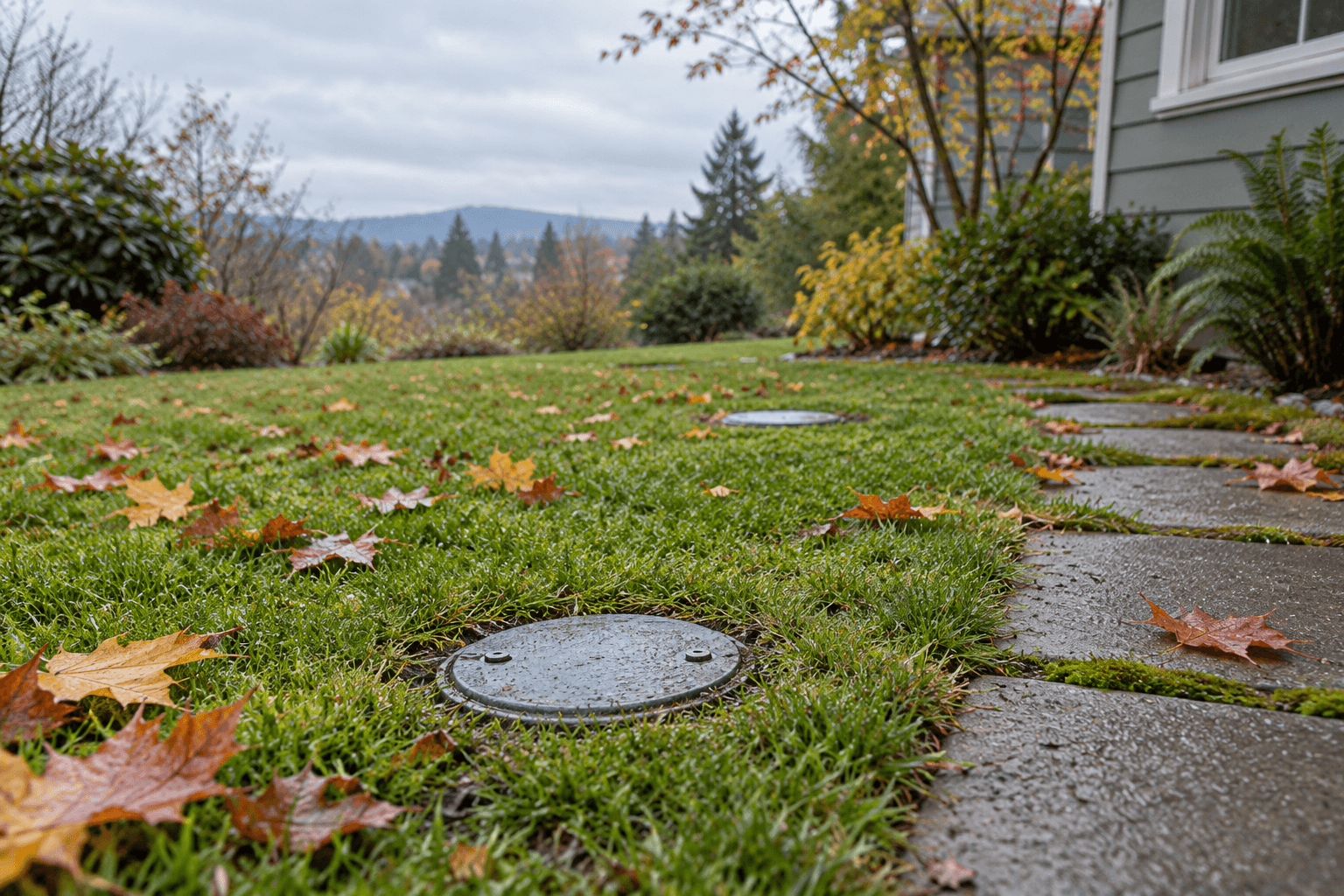
A groundwater monitoring well is a narrow cased borehole that lets a consultant measure water levels and collect groundwater samples. At a home it often shows as a small round cover set flush with a lawn or driveway, sometimes bolted down, or as a short protective steel casing with a locking cap. Several may sit around the old tank area.
Do not assume what a pipe or cover is from its appearance. Old fill and vent pipes from the tank itself, irrigation boxes and utility access points can look similar. A licensed professional can confirm what each feature is, and the records below usually settle the question.
Why the Wells Were Installed
Most residential heating oil cleanups deal with soil. Wells usually appear when a release reached groundwater or the investigation needed to rule that out. DEQ's heating oil cleanup checklist has a separate section for groundwater and complex risk-based evaluations, which calls for delineating petroleum in soil and BTEX and PAH compounds in groundwater. Cases like these sit at the complex end of heating oil cleanup work, where groundwater may be sampled more than once before a file closes.
Not every well in a yard belongs to the house's own tank. A well can be part of an investigation centered on a neighboring property, or on a different kind of site nearby. The file and the well report will show who installed it and for which project.
Is Monitoring Still Required?
Start with the DEQ file. DEQ's fact sheet on heating oil tank records says most records for heating oil tank projects as of April 3, 2024 are in the Your DEQ Online public records portal, under the leaking heating oil tank project type. Older projects may have additional records that are not online, which you can request through DEQ's public records process.
Read the cleanup report and any letter registering it. Look for any mention of the wells: the sampling schedule, the last sampling event, and any condition that applies after closure. A seller may describe a closure letter, but you need the letter and report themselves. If the tank was also decommissioned, keep its DEQ decommissioning report in the same folder.
If the file shows an open project, or does not say whether monitoring has ended, contact DEQ's Heating Oil Tank Program before anyone alters the wells. If you cannot find the file at all, a records search can check what was filed for the address.
Who Can Retire a Monitoring Well
Oregon Water Resources Department rules for monitoring wells, in OAR chapter 690 division 240, make the landowner ultimately responsible for a monitoring well's condition, maintenance and abandonment, the term the rules use for permanent decommissioning. The rules require a license, bond, start card and well report for abandoning a monitoring well. Anyone doing the work for another person must hold a Monitoring Well Constructor's License or work under a licensed constructor's supervision. A landowner who is not licensed needs a landowner well permit for each well.
The rules also tie the method to the facts. Where groundwater contamination has been identified, the borehole generally has to be redrilled and the casing and screen removed before sealing. Where it has not, the method depends on whether the original construction can be verified, for example from a well report or from construction information submitted to DEQ. That is why the records come before the drill rig.
DEQ's own monitoring well guidance, first issued in 1992 and still posted, says a well no longer in active use should be permanently decommissioned by a licensed monitoring well constructor, with a geologist or engineer observing. It asks for a decommissioning report to DEQ within 30 days, or on another schedule in an approved work plan, including a copy of the driller's record sent to the Water Resources Department. EPA's monitoring well guidance gives the reason: a decommissioned well should be sealed so it cannot act as a conduit for contaminants from the surface to the water table or between aquifers.
Finding the Well Report
Well constructors file a report with the Water Resources Department when a well is constructed, altered, converted or decommissioned. The department's well report query can search monitoring well reports by township, range and section, tax lot, owner name or well label number. The department notes that older reports often lack a street address or tax lot, so search more than one way.
Some wells carry a Water Resources Department identification label, and its number links the reports for that well. Record it if you can read it without opening the well. The department reviews submitted well reports, and in 2025 the Legislature raised the program's fees through House Bill 2808, effective July 17, 2025, to support that review work and staffing. Expect the report for the retirement itself to be filed with the department and checked, so ask for a copy for your property file.
Well Status and Retirement Checklist
Use an illustrative checklist like the one below to organize what you find. It does not describe a real property, and it does not replace the professionals' judgment.
- Location: a sketch or photo of each well, its cover type and any visible label number, taken without opening it.
- Purpose: the DEQ project number, the address the project concerns and the consultant or provider who installed the wells.
- Status: the last sampling date, whether the project is open or closed, and any post-closure condition that mentions the wells.
- Authorization: written confirmation from DEQ or the file that monitoring has ended and the wells may be retired.
- Constructor: the licensed monitoring well constructor's name and license number, and who will observe the work.
- Records: the original well reports, the start card for the retirement, the new well report and any decommissioning report sent to DEQ.
- Restoration: who repairs the lawn, paving or landscaping around each well once the work is finished.
Keep the completed checklist with the tank file. A buyer, lender or later contractor may ask what the wells were and how they were retired, and a well report number answers that question better than a description.
Planning the Work Around the Property
Retiring a well is short work compared with the original cleanup, but it can still bring a drill rig onto the site, especially where the borehole has to be redrilled. Agree access, the route across the yard and surface repairs in writing. If the wells sit where you plan an addition or new paving, raise them alongside any other questions about building over a closed tank so the timing fits the design.
When you request a quote for oil tank cleanup support, mention the wells at the start and attach whatever records you have. Ask the provider which parts it handles directly, such as reviewing the file or coordinating with DEQ, and which require a licensed monitoring well constructor.