Sometimes, but the answer depends on what the earlier investigation measured and where, not on the fact that a cleanup file exists. A Salem heating oil cleanup that closed with DEQ shows that the work met the cleanup option the provider used. It does not automatically show that the soil was assessed for a vegetable bed, a fruit tree or a corner where children dig.
Before you plant, put the old file beside your garden plan and ask one question of a qualified environmental professional: does the existing data cover the use you now intend? Keep the vegetables, fruit, play areas and pets in that same conversation, because they all depend on the same soil records and the same answer.
Check your soil records before planting food
Share the old cleanup file, the site sketch and where you plan beds, fruit trees or play areas when requesting a quote. Ask which sampling the quote covers and which questions belong with another professional.
What a Closed Cleanup File Was Built to Answer
Under Oregon's Heating Oil Tank Program, a DEQ-licensed service provider certifies a heating oil cleanup and DEQ issues a letter registering that certification. DEQ lists the available cleanup options as soil matrix cleanups to set petroleum hydrocarbon levels of 100, 500 or 1,000 ppm, the generic remedy, and risk-based cleanups. Find out which option your file used, because each one leaves the yard in a different condition.
The generic remedy matters most for gardeners. It allows soil with total petroleum hydrocarbons up to 10,000 ppm to stay in place where at least three feet of clean soil covers it, along with other conditions. DEQ's cleanup checklist for that option records that any contaminated soil left in place is deeper than three feet below the surface, and the site sketch should show where it remains. Digging a deep bed, setting fence posts or planting a tree into that cover changes the condition the closure relied on.
If you bought the house and never received the paperwork, a decommissioning records search can check what was filed for the address. Without the file, nobody can tell you whether soil was left in place or where.
Where the Original Samples Came From
Tank closure sampling is designed to find a release from the tank, so it targets soil near the tank bottom. DEQ's process overview for service providers describes initial samples taken six to 12 inches beneath the ends of a removed tank, or 12 to 24 inches beneath the ends of a tank filled in place, plus samples wherever contamination is visible. Those results describe soil several feet down at specific points.
A vegetable bed works the top foot or so of soil across a wider area. A small spill at the fill pipe, or oily soil that was spread around during earlier work, may not appear in samples taken beneath the tank. Mark each sample point on your garden sketch so the reviewer can see how much of the planned growing area the old data actually reaches.
Petroleum Tests Rather Than Lead Charts
Heating oil leaves a petroleum signature, and the tests should match it. DEQ's cleanup checklist defines total petroleum hydrocarbons, or TPH, as diesel-range results by method NWTPH-Dx. Risk-based closures also call for analysis of BTEX compounds (benzene, toluene, ethylbenzene and xylenes) and polycyclic aromatic hydrocarbons, or PAHs, in the most contaminated soil remaining.
A routine garden soil test for pH and nutrients does not measure any of these. Oregon State University Extension's soil testing lab guidance advises a certified lab whose methods match health and safety standards when the concern is environmental health, and land-use history to narrow down the contaminants, since testing for every possible one is prohibitively expensive. That is why the tank history matters: it narrows the request to petroleum analytes. Lead gardening thresholds in extension publications are written for lead and should not be borrowed to judge a heating oil result.
Methods also change over time. DEQ finalized revised vapor intrusion guidance in 2025, and a companion DEQ fact sheet on the NWTPH-Dx method says the agency expects projects to use the most recent version of the method, asks that reports state the method revision and cleanup protocol, and says diesel and heavy oil results reported separately should be added together before comparison with its screening value. When an older report is reread for a garden decision, note the analysis date and method in the request.
How Residential Screening Treats Homegrown Produce
DEQ's risk-based concentration table, revised in August 2023, lists values for soil ingestion, skin contact and inhalation, volatilization to outdoor air, leaching to groundwater and tap water use. Its receptor columns cover residents, urban residents, occupational users and construction and excavation workers. Eating produce grown in the soil does not appear as a separate column, so ask the reviewer how the screening used for your file treats a food garden.
EPA's urban gardening guidance lists petroleum spills, including anywhere a buried or aboveground storage tank has been located, as a source of PAHs and BTEX compounds. It says EPA has no soil screening levels for gardening and that states may decide residential levels are appropriate or set site-specific ones. EPA also describes the greatest gardening risk as contaminated soil reaching the mouth or being breathed in as dust, and says research shows minimal risk from eating plants grown in contaminated soil, while root vegetables have a higher potential to accumulate contaminants. Treat that as general guidance for mildly contaminated soil, not as a heating oil cleanup standard.
Fruit Trees, Raised Beds, Children and Pets
A fruit tree raises a different question from a lettuce bed. The planting hole, stakes and irrigation lines go deeper than a bed, and roots keep spreading for years. If any soil was left in place, ask the reviewer to compare the planned planting depth and spread with the depth and position of that soil before you choose the spot.
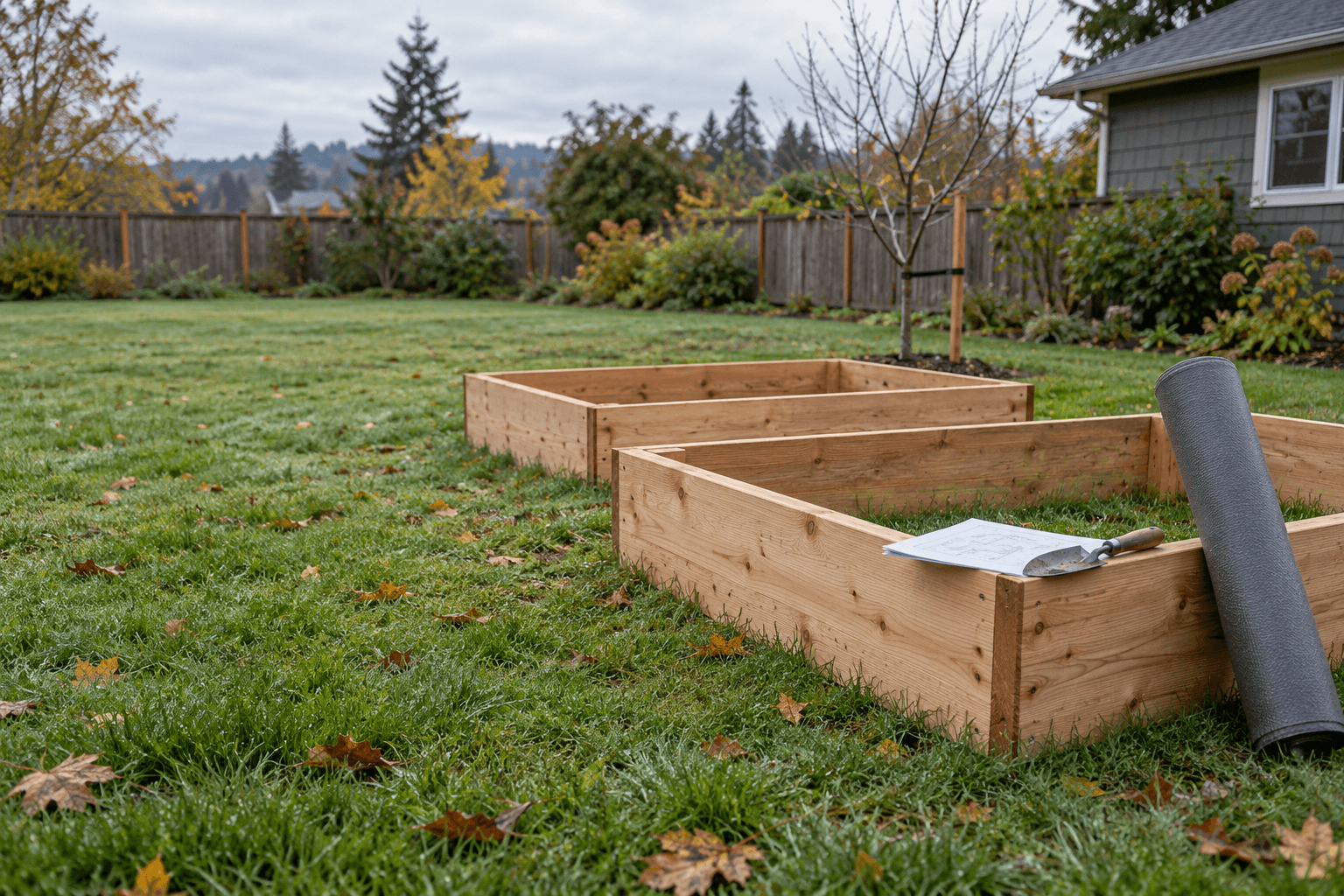
Raised beds are the usual way to separate a garden from questionable ground. EPA suggests landscape fabric beneath the bed, a frame of untreated lumber, and asking the soil supplier for proof that the soil was tested. Restoration after a tank removal often finishes with an imported topsoil cap, so ask where that soil came from and keep the delivery record. A raised bed does not change the soil beneath it, and digging compost into stained soil does not turn that soil into a documented cleanup.
Children and pets belong in the same review. Hand-to-mouth play and dogs digging bring people into contact with soil that a planted bed might never disturb. Mark play areas, sandboxes and the spots where pets dig on the same sketch as the beds. If you water the garden from a private well, raise that as a separate drinking-water question rather than folding it into the soil review.
Garden Layout and Assessment Coverage Worksheet
Fill in an illustrative sheet like the one below before the first conversation with a reviewer. It does not describe a real property, and the reviewer decides what the answers mean.
- Old file: cleanup option named in the report, DEQ registration letter date, provider license number and the analysis dates and methods on the lab reports.
- Remaining soil: whether any contaminated soil was left in place, its depth below the surface and its outline on the site sketch.
- Sample points: each location and depth, the analytes tested (TPH, BTEX, PAHs) and the result beside it.
- Planned uses: vegetable beds, root crops, leafy greens, fruit trees and berries, each with its footprint and digging depth.
- Play and pet areas: sandbox, lawn games, dog runs and favorite digging spots.
- Gaps: planned growing areas with no sample data, unknown fill sources and any spill history at the fill pipe.
- Questions for the reviewer: whether existing data covers each use, what additional shallow sampling would answer and which laboratory would perform it.
Keep the completed sheet with the cleanup file. If the garden plan changes later, a new bed or tree location should prompt a fresh check against the sheet rather than an assumption that the earlier answer still holds.
Requesting a Review Before You Plant
Send the old report, the site sketch and the worksheet together. Ask the professional to say in writing whether the existing results address the planned uses, which areas they do not reach, and whether additional samples would be shallow surface samples, deeper samples near soil left in place, or both. Ask for the analytes, the laboratory and a price for each part, and how long results usually take.
Keep each question with the right person. The licensed provider or environmental consultant answers what is in the soil and where. Health questions about eating what you grow belong with your doctor or local health department. If the plan includes a greenhouse slab, shed or other structure, building over a closed tank raises its own design questions.
When you request a quote for oil tank soil testing, say that the question is a planned food garden, attach the file, and ask the provider to separate the work it will do from questions that need another professional.