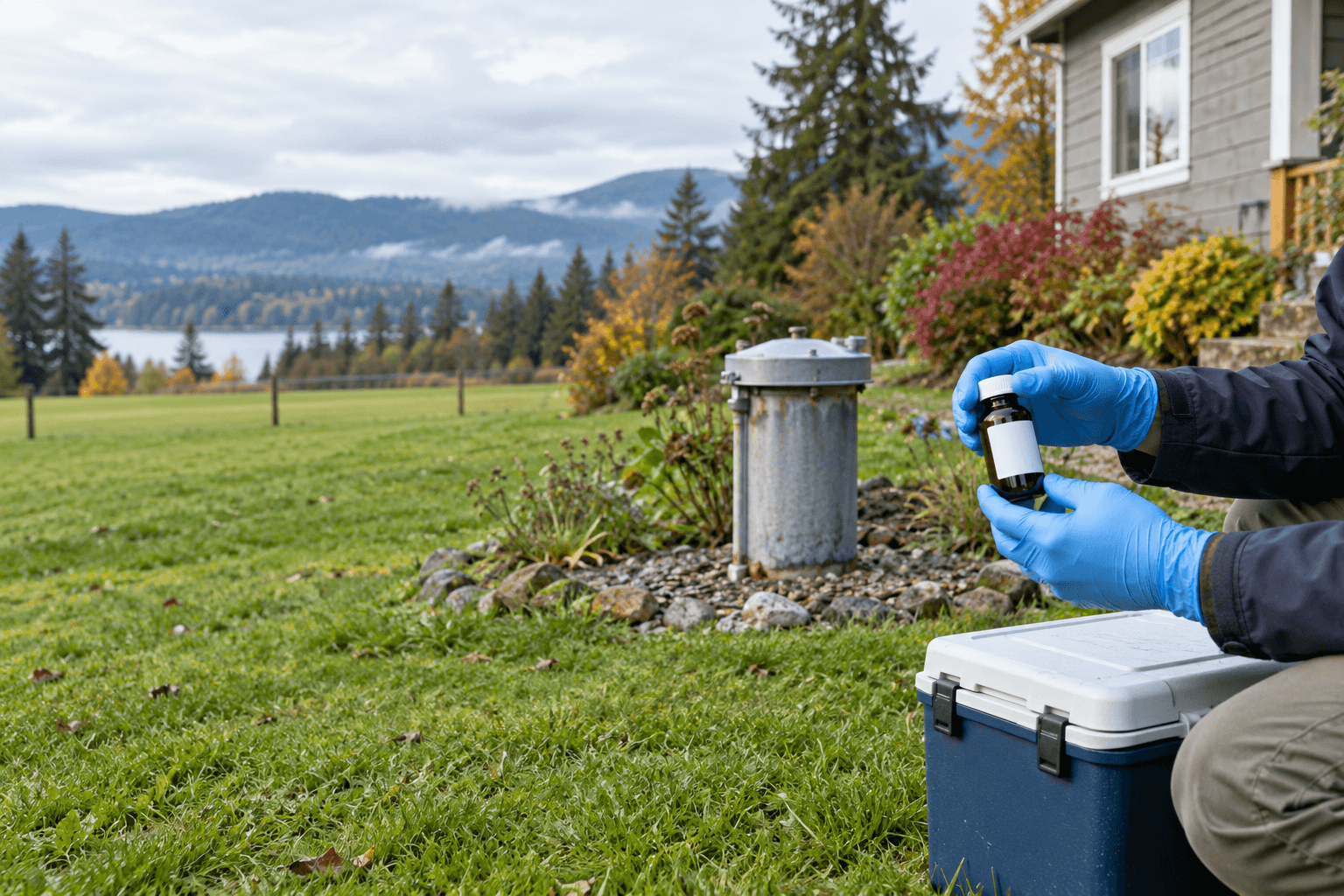
Yes, a heating oil leak can contaminate groundwater that supplies a private well. A nearby leak does not prove that oil has reached your household water, but it gives you a reason to request a drinking-water assessment. For a Salem-area home using a private well, start by telling your local health department and environmental professional about the leak and asking what testing fits the situation.
Have an old water report ready, but check what the laboratory tested. A result for bacteria does not answer whether petroleum-related chemicals are present. You need a scope that addresses the suspected fuel, the water you use and the questions the professional must resolve before advising you about that supply.
Soil Testing & Contamination Cleanup in Salem
Tell us about your tank, property and planned work using the quote form on this page.
Address suspected contamination before ordering a routine test
If you suspect your well water contains fuel or harmful chemicals, stop drinking it and use bottled water or another known-safe supply. CDC's contaminated well water guidance advises contacting the local health department. CDC also says that chemically contaminated water should not be used for any purpose and that boiling does not remove those chemicals. Ask for advice about bathing, washing and other household uses while the assessment proceeds.
Describe what prompted the concern: a reported tank leak, a change at the tap, or a consultant's finding. Give the date and say whether anyone has tested your water since then. Ask who can give you interim water-use advice and how to reach that person when results arrive. Do not taste the water to investigate a suspected fuel problem.
Confirm the household's water source before commissioning private-well work. Check whether the kitchen supply comes from a domestic well, a shared system or a public utility. A property can have an old well without using it for drinking water. If a utility supplies your home, report the concern to its operator and ask about the appropriate investigation.
Explain the fuel concern when requesting laboratory work
EPA's private well testing guidance identifies fuel-oil odors and nearby buried fuel tanks as reasons to consider testing for volatile organic compounds, or VOCs. It also recommends testing for suspected contaminants beyond routine annual checks. Use that guidance to start a discussion with your health department and consultant; it does not establish a complete testing panel for every heating-oil release.
Tell the laboratory that your concern involves heating oil and household drinking water. Ask the consultant to specify which substances, called analytes, the laboratory should measure and why. Have them confirm whether the proposed scope addresses the known product and site findings. Avoid ordering a package based only on a name such as basic potability or full water test. Request the actual list of analyses.
Keep soil and water reports separate. A soil sample near the tank describes that sampled material; it cannot stand in for a sample of your household water. Our soil testing guide explains the soil investigation. Send those findings to the water specialist as background, while asking for a separate answer about the drinking-water supply.
Gather the well information the assessor needs
Put your existing well records, water reports and treatment-system information in one folder. Include the well construction record if you have it. Mark unknown details as unknown instead of estimating a depth or repeating an earlier owner's recollection as fact. The professional can tell you which missing records matter for the proposed assessment and how to obtain them.
Provide a simple property sketch showing the well, house and known or reported tank location. Label approximate positions. Share any available consultant drawing showing the release investigation, and let the assessor decide what it establishes about your well. A distance measured across the yard is useful context, but it does not replace their assessment of whether the release could affect the supply.
Tell the assessor about filters, softeners and other equipment between the well and the tap. Include model details and maintenance records you already have. Ask which sampling locations will answer the investigation questions, including whether the scope needs to distinguish untreated source water from water delivered through treatment. Leave decisions about sampling points and equipment changes to the professional.
Confirm the laboratory can perform the requested analysis
Oregon Health Authority's accredited laboratory directory provides ORELAP drinking-water laboratory information and tells users to contact labs to confirm services for particular analytes. Ask the selected lab to confirm its accreditation for the drinking-water analyses in your proposed scope, whether it accepts household samples and whether another laboratory would perform any of the work.
Agree on who will collect the samples before booking the visit. Ask the laboratory and consultant to supply the collection requirements, containers and transport arrangements for the selected analyses. Do not adapt instructions from an earlier bacteria test to a petroleum investigation. Confirm who will complete the sample documentation and who will receive the full report, including any qualifications on the results.
Request a written price that separates the site visit, laboratory analyses and professional interpretation. Ask for expected turnaround and the contact procedure for findings that need prompt attention. Include any proposed follow-up sampling as a separate item or allowance. You should know whether the price covers a report of numbers alone or a discussion of what those numbers mean for your household.
Use this well-water assessment request sheet
Copy these fields into an email or bring them to the first consultation. Fill in what you know, attach existing records and ask the assessor to complete the technical scope. Keep the agreed version with the laboratory order so everyone works from the same request.
- Property and contact: address, owner or occupant contact, drinking-water source, and the person arranging access. State whether the well supplies other households.
- Reason for assessment: suspected or confirmed heating-oil release, date learned, known tank location, and any available release report or project contact. Separate what you observed from what someone reported.
- Well and treatment records: well identifier if known, construction record, previous water results, current treatment equipment and recent maintenance. Note gaps for the assessor to resolve.
- Requested scope: have the professional list the sampling locations, analytes and methods, the laboratory, and the reason for each part of the proposed investigation.
- Collection arrangements: named sampler, laboratory instructions, access appointment, sample documentation and delivery responsibility. Ask who will check that the laboratory has everything it needs.
- Results and next steps: named technical reviewer, expected report date, urgent-result contact, interim water-use advice, and the question any proposed repeat sampling would answer.
Review the report before changing water use
Book the results discussion when you commission the work. Ask the professional to walk through the sample locations and dates, substances tested, reported concentrations and any laboratory notes. Ask what a non-detect means at the laboratory's reporting limits and whether those limits answer the investigation question. A short email saying the test passed leaves too much unexplained.
Request a written explanation of the findings and the recommended water-use decisions. Have the reviewer identify any uncertainty and say whether another sample is needed, where it would come from and what decision it would support. Keep advice from your health department with that report. Avoid treating a result for one tap on one date as an assessment of every water source on the property.
If treatment is proposed, ask the water specialist to identify the contaminant it addresses, the evidence needed to check performance and the maintenance plan. CDC notes that no single treatment type covers all problems and recommends testing to confirm treatment worked before resuming use. Do not assume an existing filter or a new cartridge resolves a fuel concern without that assessment.
Coordinate the water assessment with the tank cleanup
Tell the heating oil tank provider that your home uses a private well and identify the professional assessing the water supply. Ask them to exchange relevant reports with your permission. Keep the drinking-water findings alongside the cleanup records, with clear labels for which work each report covers. Our oil contamination guide explains the wider tank-cleanup process.
If the leak originated on another property, give the assessor the available project contact and reports. Keep this conversation focused on evaluating your water supply; the assessment itself does not decide who caused damage or who must pay. If the source cleanup involves soil beneath a building, our under-home cleanup guide covers that separate coordination problem.
For an oil tank cleanup inquiry in Salem, mention the private well at the start. Describe the suspected release and provide the reports you have. Ask who will handle the tank investigation and who will coordinate the separate drinking-water assessment, so your next appointment addresses the question your household needs answered.