
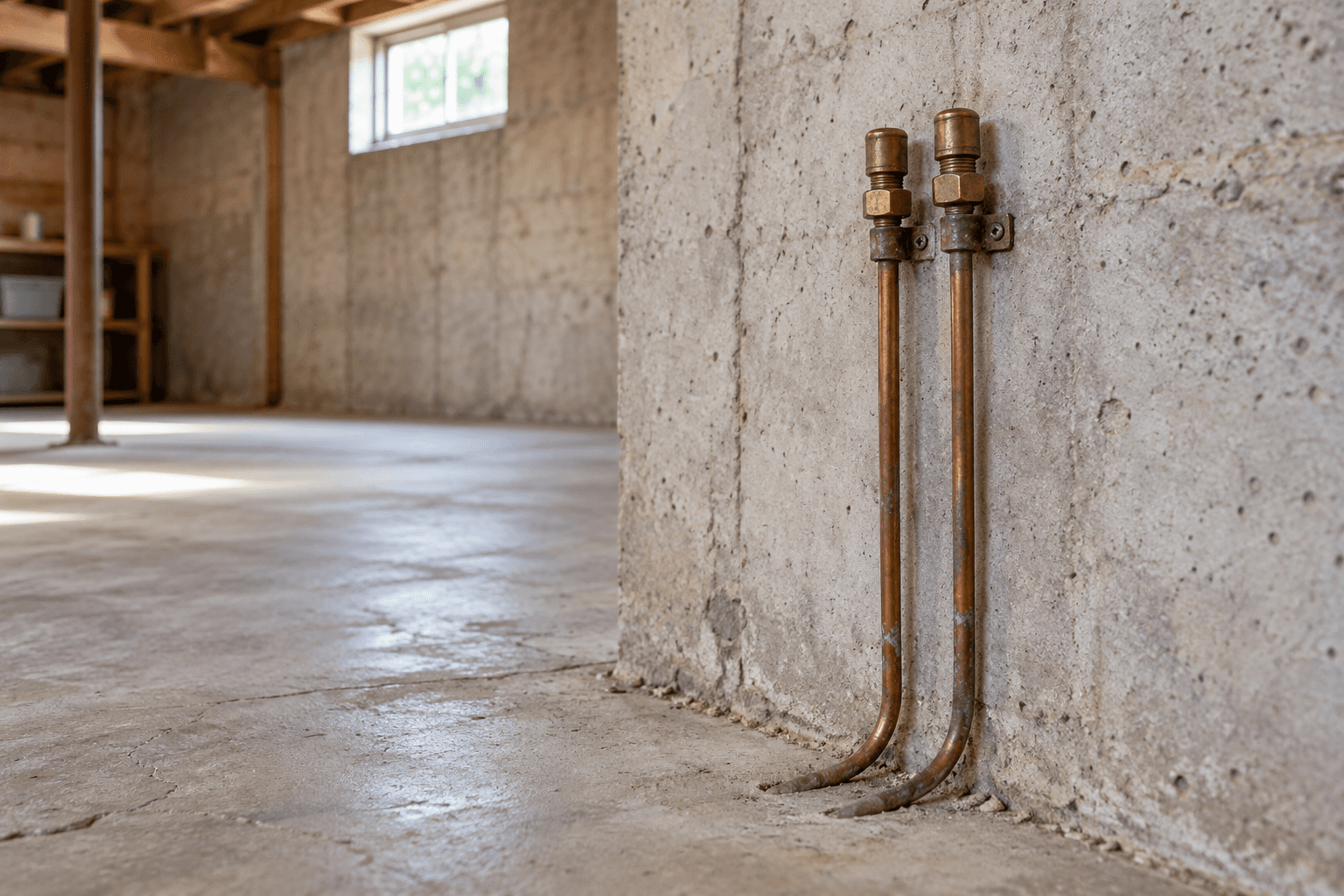
Before a Salem basement remodel, have a qualified fuel-system professional identify any old oil lines in the work area and confirm their condition. A retired furnace, a missing tank or a cap on one visible end does not tell your remodeler what lies behind the wall or beneath the floor. Keep demolition, drilling and new finishes away from uncertain piping until the team has assessed it.
Your first job is to collect the history and show the contractor where the proposed work crosses the old system. The useful result is a written handoff that identifies the lines, explains what the professional checked and tells the remodeler which questions remain. You do not need to open a fitting or disturb the slab to start that conversation.
Record what you can see without disturbing the lines
Take an overview photograph of the basement and closer photographs of visible pipes from an accessible position. Include fixed reference points such as a window, doorway or foundation corner. Keep photographs of separate locations in separate groups so the contractor can match them to the room. Note the date and whether you noticed a smell, staining or liquid before anyone began work.
Describe appearances without deciding what a pipe carries. Copper tubing beside a former furnace may suggest an old fuel connection, but a photograph does not establish its purpose, its contents or its other endpoint. Ask the professional to distinguish fuel piping from water, gas, refrigerant and other building services. Do not remove caps, bend tubing or test an unknown line yourself.
Add the old furnace position and the known or reported tank position to a rough room sketch. Mark uncertain locations as uncertain. If you do not know whether a buried tank remains, use our buried tank discovery guide to prepare for a separate locating inquiry. Avoid planning a new wall around an assumption about where the system ends.
// Featured service
Basement Oil Tank Removal
Removal of indoor heating oil tanks from Salem basements, garages and crawlspaces. We pump out the oil and sludge, make the tank safe, cut it into sections that fit up the stairs, recycle the steel, and close off the old fill pipe so nobody delivers oil into a tank that is gone.
Compare the pipe locations with the old work records
Gather the tank report, earlier heating invoices, photographs and any drawing that accompanied the conversion. Look for a description of piping work as well as the tank itself. An invoice saying tank removal may not describe every indoor line you can now see. Ask the original provider to explain the scope if the wording leaves that unclear.
Show the current contractor the documents before the visit. Ask them to compare the recorded work with the visible condition and identify any gaps. They may need more access or a separate investigation before confirming the route. Record that limitation rather than treating an approximate line on an old drawing as a surveyed location.
For a home still going through a heating change, our replacement and conversion guide covers the broader project. This basement review deals with piping left in the proposed remodeling area. Give the remodeler the actual findings for those lines, even if the new heating system has worked for years.
Book the right assessment before demolition
Start with a contractor qualified to assess the former oil-heating system. Explain that you need identification, endpoint confirmation and a written scope for any remaining piping work. State whether a tank remains, whether you have decommissioning records and whether you have noticed an apparent release. Ask which parts of the assessment the contractor handles and which need another specialist.
Oregon DEQ states in its homeowner tank guidance that owners hiring out heating oil tank cleanup or decommissioning must use a licensed HOT service provider. If the investigation identifies that work, arrange it through the appropriate licensed provider. Ask the professionals to establish the applicable scope; do not assume a general remodeling quote includes tank certification or environmental investigation.
Send the assessor the remodel drawing too. A proposed bathroom trench, floor anchor or framed wall may cross a line that the owner had planned to leave alone. Ask the assessor and remodeler to discuss those intersections before either finalizes the price. Each should know who will resolve uncertainty and who can authorize a change in the work.
Use a line-by-line confirmation sheet
Give each visible line a simple identifier on your sketch, such as L1 and L2. Use those same identifiers in photographs, quotations and the final handoff. The professional should complete the technical findings; you can record the questions and collect the answers. For each line, request these details in writing.
- Identity and route. Record what the professional identified, the visible path, the confirmed endpoints and any concealed section they could not verify. Reference the photographs or drawing used during the visit.
- Connection status. Ask which equipment or tank the line served and how the professional established whether it remains connected. Keep an unknown endpoint open on the task list until someone resolves it.
- Contents and condition. Ask what the assessment established about remaining contents and the condition of the piping. Record any evidence of a release and whether the professional recommends an environmental referral.
- Agreed work. Identify the specific line or section the contractor will address, the limits of access and any work that requires a separate quotation. Ask how they will document completion.
- Remodeling handoff. Name the person who receives the completed assessment, any restrictions on nearby work and the person responsible for resolving outstanding questions before the builder proceeds.
Request a dated note with the assessor's name and scope. A brief statement that someone checked the pipes is hard to use when the flooring contractor asks about a particular penetration. A numbered drawing and a short entry for each line let the trades discuss the same location without relying on your recollection.
Include handling and disposal in the quote
Do not treat apparently abandoned piping as ordinary demolition scrap before the contractor has assessed it. Ask whether their quote includes handling any remaining fuel, removing the agreed material and arranging its disposal. Have them identify exclusions, responsibility for accidental damage and the records they will provide when the work ends.
EPA's household hazardous waste guidance warns against pouring these wastes down drains or onto the ground and against mixing leftover hazardous products. It also notes that residues can remain in empty containers. For this project, leave recovery and disposal decisions to the qualified contractor; do not drain an unknown line into a household container or flush it into a floor drain.
Ask the contractor to confirm the receiving facility and applicable waste requirements for the material they handle. General household collection advice does not establish that a facility accepts a contractor's project waste. Keep any disposal documentation with the work report, and check that the description matches the scope you authorized.
Coordinate the permit and inspection questions
Tell the remodeling contractor about the old lines while the design is still open to changes. The City of Salem's residential permit guidance identifies electrical, plumbing, mechanical and fire work as separate trade permits. Have the contractor confirm which permits and inspections apply to your particular project with the authority responsible for the address.
Ask who will arrange any inspection before the builder conceals the affected area. Include that appointment in the schedule alongside the piping assessment and the planned start of floor or wall work. Avoid booking the finishing crew around a presumed same-day resolution when the contractor has not yet confirmed the route or condition of the lines.
For example, a homeowner may plan a bathroom across the former furnace corner while an old fuel line disappears into the slab nearby. The useful next step is a joint review of that location before the remodeler fixes the trench route. This is a planning example, not a reported Salem job or a reason to assume the whole basement needs excavation.
Resolve new findings before covering the area
Agree in advance who the remodeler should contact if work reveals additional piping, liquid or staining. Keep work away from the discovery until the appropriate professional assesses it. Photograph the condition from a safe accessible position and record when the crew found it. Let the professional determine the investigation and any reporting obligations.
If your concern includes fuel odor inside the house, ask whether the assessment addresses that concern or requires another specialist. Our indoor air assessment guide explains the questions to raise. Do not use the presence or absence of a smell as your own clearance decision, or treat new flooring as the answer to an unresolved contamination question.
Keep the handoff with your remodel records
Before finishing resumes in the affected area, ask for the completed pipe sketch, photographs, description of work and outstanding-item list. Have the fuel-system professional explain what they confirmed and any limits to their assessment. Ask the remodeler to acknowledge the information they need for the next construction stage, including applicable inspection requirements.
Save those records with the tank documents and the finished remodel plans. If piping remains, retain its documented location and status for later work. For a basement oil tank removal inquiry in Salem, describe both the tank history and the lines that affect your renovation. Request a scope that addresses those specific connections before you commit to the new floor or wall layout.