When heating oil reaches a floor drain, sump pit or footing drain, the spill is no longer limited to the place where it started. Pipes can carry oil to the sanitary sewer, a septic system, a yard outlet or the storm system. After the immediate response, the next job is to map those routes with a plumber and an environmental professional so the cleanup follows the oil rather than stopping at the basement floor.
Do not try to flush the lines clear or pump a contaminated sump out to the yard or another drain. Doing so can move oil further along the route you are trying to trace. Leave decisions about removing liquid from the system to the professionals and the operator of the system it drains into.
Follow the oil through your home's drains
Describe where oil or sheen appeared, which drains or sump are involved and any drain map you have when requesting a quote. Ask which investigation work the quote covers and which needs a plumber or another specialist.
Urgent Steps Come First
This page assumes the leak has been stopped and the urgent response is under way. If oil is still moving, start with emergency leak cleanup instead. Oregon DEQ's guidance on reporting a spill lists any amount of oil to waters of the state, and oil spills on land over 42 gallons, among reportable spills to the Oregon Emergency Response System. DEQ also says the person responsible must clean up a spill regardless of quantity, and may later ask for a written spill report.
Drains are why that first threshold can matter at a house. The City of Salem describes its stormwater system as catch basins, ditches and pipes, with runoff sent downhill to the nearest stream, and it takes reports of stormwater problems through Public Works Dispatch around the clock. If any part of the route reaches a ditch, catch basin or creek, tell the responders.
How Oil Travels Through a House
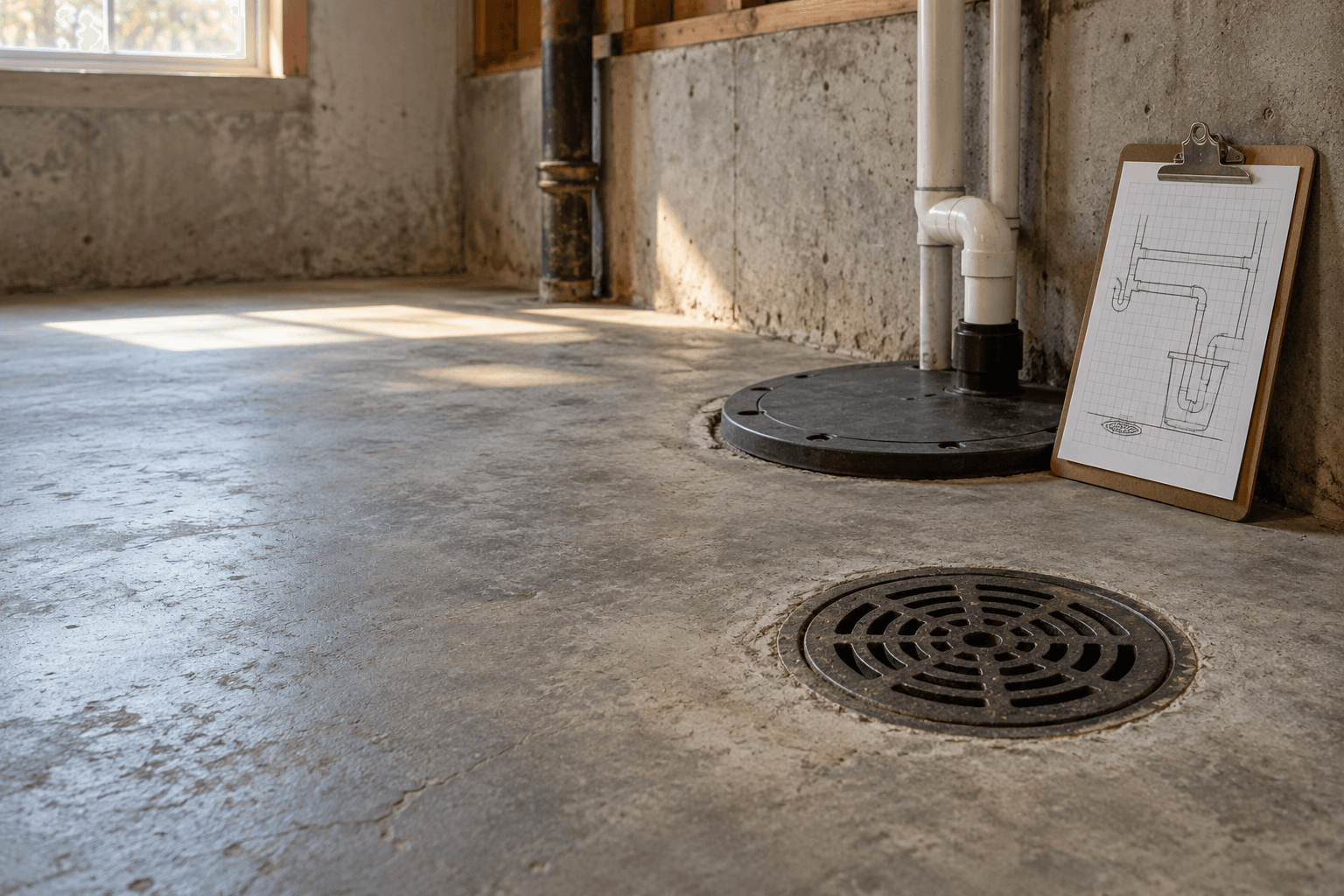
A basement can hold several separate drainage systems that look alike from the floor. A floor drain may connect to the sanitary sewer, to a sump, or to a line that leaves the house. A sump pit often collects water from perimeter footing drains and pumps it to a discharge point outside. Laundry and utility sinks usually join the sanitary line, while downspouts and area drains may run to the street or a yard outlet.
Oil that enters one of these systems can show up a long way from the tank, and oil in the soil outside can enter footing drains and appear in the sump. That is why a sheen in a sump pit is treated as a warning sign of a leak. The investigation has to work in both directions: where the oil went from the spill, and how oil outside the house reached the drains.
Where Each Drain Discharges
Every route ends somewhere, and each ending has a different owner and a different set of questions.
- Sanitary sewer: the line leads to the public wastewater system, and the operator of that system needs to know if oil may have entered it.
- Septic system: the tank and drainfield sit on your property and may need their own assessment. EPA's septic system guidance lists oil among household chemicals that should not be flushed and says toxins poured down drains can kill the organisms that treat household waste.
- Storm system or ditch: runoff heads toward local streams, so the City and the responders need the location of any outlet or catch basin involved.
- Yard outlet or dry well: the oil may have entered soil some distance from the house, which widens the area the environmental professional needs to assess.
- Unknown: some older Salem homes have drains whose destination nobody has confirmed. Treat these as open questions until a plumber traces them.
Floodwater, Rain and High Groundwater
Water moves oil. During heavy rain, a sump may run for hours and carry whatever has reached the pit to its discharge point. In December 2025 the City of Salem warned of a high-impact atmospheric river during a National Weather Service flood watch, and said forecast rainfall rates could cause issues throughout the storm drainage system. Storms like that are when a basement spill, a leaking line or oil in the soil is most likely to travel.
If the oil was found during or after a storm, record when the sump was running, whether the basement took on water and where any standing water drained. Note high water in the yard and whether drains backed up. These details help the environmental professional decide where to sample, and they belong in the same investigation rather than a separate flood file.
Mapping the Drainage System
A plumber traces the pipes; an environmental professional decides what the oil means for each place they lead. Ask the plumber how they will confirm each connection, for example with a camera inspection or the home's permit drawings, and to mark each line on a simple plan of the house and lot. Record how each connection was confirmed, because an assumed connection and an inspected one carry different weight.
If a basement tank was the source, the basement tank removal work and the drain investigation should be planned together, so the crew does not disturb lines the plumber has not yet traced. Supply lines between the tank and the furnace are a separate question from the drains, and old oil lines left in walls or floors may need their own check.
Ask, too, what happens to the drain components once the route is known. A sump pump, basin, trap or length of pipe that held oil may need cleaning or replacement. DEQ's spill fact sheet says cleanup materials go to an approved facility, so oily water and debris taken out of the system should not go back down a drain. Agree who handles each item and how it will be documented, so the work does not stop at the floor while oil remains inside the pipes.
Drainage Investigation Map and Handoff
An illustrative map and handoff sheet could list the items below. It does not describe a real property, and the professionals decide what each finding means.
- Source: tank or line location, when oil was first seen and what was done to stop it.
- Entry points: each drain, sump or cleanout where oil, sheen or odor was observed, with dates and photos.
- Connections: where each drain leads, how the plumber confirmed it, and any line still unknown.
- Discharge points: sewer, septic, storm system, ditch or yard outlet, with the owner or operator of each.
- Water events: rain, sump cycling, flooding or backups between the spill and the investigation.
- Notifications: who reported the spill, to whom and when, and any reference number received.
- Sampling questions: which discharge points and areas the environmental professional proposes to check, and why.
Give the same sheet to the plumber, the environmental professional and the cleanup provider so each knows what the others have found. If the oil may have crossed onto a neighboring property through a shared line or outlet, note that on the sheet and raise it with the responders early.
Keeping Each Decision With the Right Person
The plumber answers where pipes go and whether they are damaged. The environmental professional answers where oil is, how far it traveled and what sampling will show that. The operator of each receiving system answers what it needs from you, and DEQ decides what a reportable spill requires. Keep their written answers together, because the soil contamination cleanup that follows may depend on the drainage findings.
When you request a quote, say that oil reached the drains, describe the systems involved and attach the map, even if it is incomplete. Ask the provider which parts of the investigation it covers directly and which need a plumber or another specialist.