
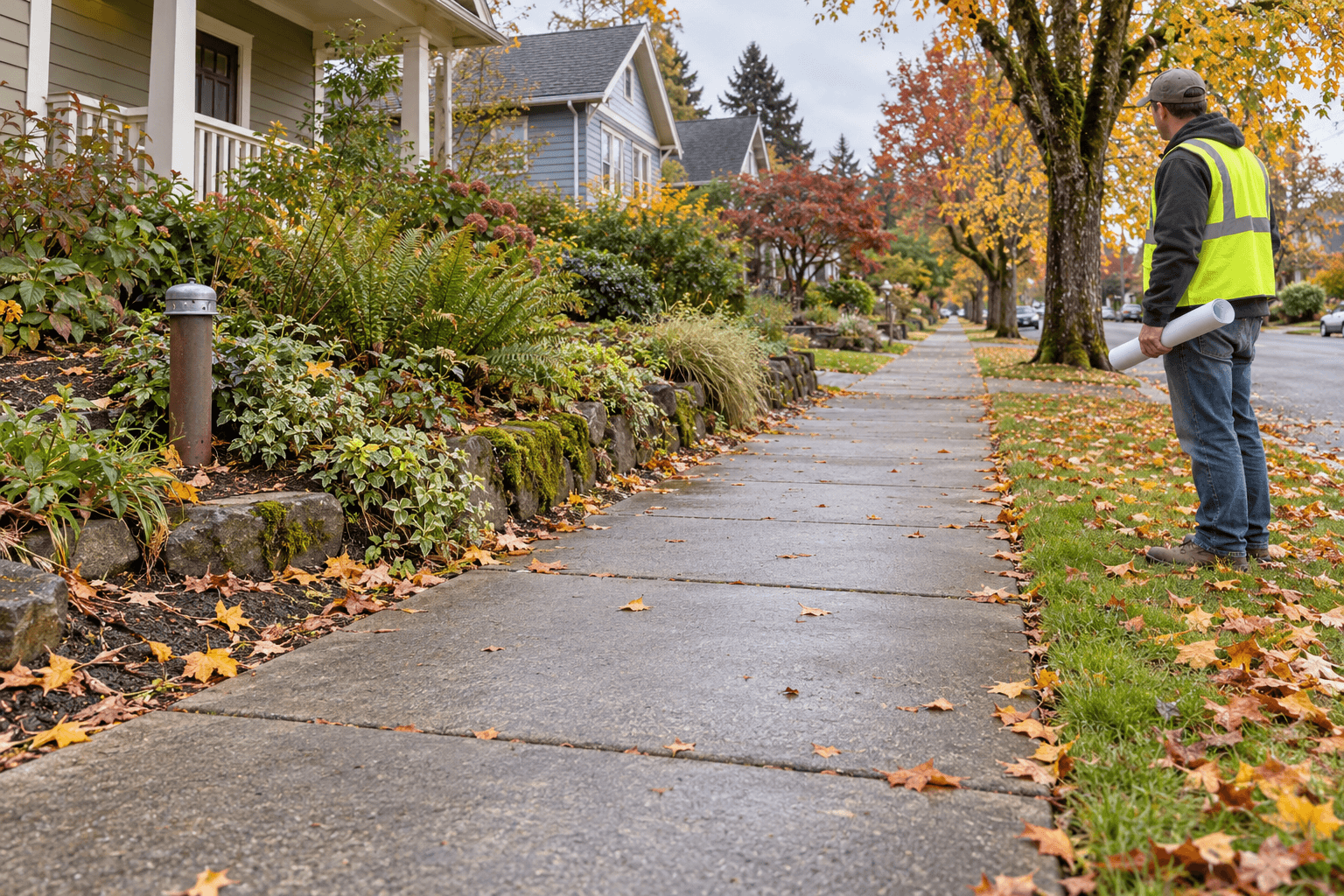
If an old oil tank extends beneath a public sidewalk in Salem, ask the tank provider to describe the proposed work area before you agree to a removal date. Include the sidewalk, equipment positions and any street space the crew expects to use. Then confirm the responsible right-of-way authority and the permissions needed for that particular address.
Keep one project file for the tank investigation, public-space permissions and surface repair. Ask each provider to identify the work they will perform and the decisions they need from someone else. You need a coordinated scope before anyone cuts pavement, including a plan for people who normally walk through the work area.
Plan tank removal beneath a public sidewalk
Share the tank location, access details and any right-of-way correspondence when requesting a removal quote. Ask which tank work the quote covers and which public-access or pavement arrangements need another provider.
Confirm the public-space work area
Start with the locating report and a drawing that distinguishes confirmed findings from estimates. Ask the tank provider to show where the tank may extend beneath the sidewalk and where they need further investigation. Photograph the frontage from a safe, permitted position. Include the curb, nearby driveways, utility covers and the garden edge so someone reviewing the drawing can understand the setting.
Ask the relevant road authority to confirm whether it controls that frontage and which application route applies. Give it the address and drawing rather than relying on a Salem mailing address alone. If the question concerns a private boundary instead of public-space work, use the separate property-line tank checklist to organize the survey and ownership questions.
Ask about closure and ground disturbance together
The City's right-of-way permit guidance requires an approved permit for work in Salem public right-of-way, including sidewalk closures and vehicle staging. It asks for an application, fee and traffic-control drawing. The published minimum notice is five full business days; a collector or arterial street closure may need two weeks. Treat those as application planning requirements, not a promised approval date.
The same guidance identifies street-opening and parking permissions as possible additional requirements. Send the proposed ground disturbance and staging details together and ask the permit contact which permissions cover the job. Keep the application number, approved drawing and any conditions in the project file. Our Salem tank permit guide covers the wider local-permit discussion; this checklist focuses on coordinating work across the public sidewalk.
Agree who prepares the pedestrian access plan
Ask who will prepare the traffic-control drawing and who will install and maintain the approved arrangement. Give that person the proposed excavation limits, vehicle positions and working hours. Ask how pedestrians will pass the site, how the arrangement serves people using mobility aids, and whether it affects a crosswalk, bus stop or neighboring entrance. Have the responsible designer and authority resolve those details for the actual frontage.
Walk through the proposed sequence with the contractor before booking. Ask about the period between pavement removal and surface restoration, including evenings when the crew has left. Request a named contact for a displaced barrier or a blocked entrance. Do not draw your own diversion onto a public street or move the contractor's controls to make a delivery easier. Report access problems to the person responsible for the approved arrangement.
Make a responsibility list before signing
Write a name beside each task below. A company name without a contact can leave you unsure whom to call when two trades need the same work area. Ask the lead contractor to review the list with any specialist providers. Identify gaps before comparing prices, and keep the agreed version with the quotation.
- Tank work: name the licensed provider responsible for investigation, decommissioning and tank documentation. Ask which findings could change its scope.
- Public-space applications: name the applicant and the person answering questions from the authority. Record who supplies drawings and follows up on conditions.
- Pedestrian and traffic arrangements: identify the responsible planner, installation crew and contact for problems during the closure.
- Utility coordination: identify the excavator making the locate request and the contact resolving missing or unclear responses before digging.
- Pavement restoration: name the contractor pricing the repair, the person arranging required inspections and the contact for unfinished work.
- Owner decisions: specify who can approve a revised price or schedule and how the contractor will obtain that approval before extra work.
Keep utility locating in the work sequence
Oregon 811's excavator responsibilities call for a locate request at least two full business days and no more than ten business days before digging, except emergencies. The excavator must check utility responses before excavation and contact the notification center about missing responses or incorrect markings. Ask the excavator how the ticket relates to the final work area and date.
Bring old service drawings and previous locating reports to that discussion, but let the excavator explain how it will confirm the utilities relevant to this work. Ask who will address privately owned lines or areas the investigation has not covered. If the work area expands, have the contractor check what must change in its locating and public-access arrangements before it proceeds. Keep the revised drawing with the earlier version so everyone can see the difference.
Separate the tank closeout from the sidewalk handback
Oregon DEQ's homeowner tank guidance says homeowners contracting out cleanup or decommissioning must use a licensed heating oil tank service provider. It describes the provider's certification and DEQ's registration of that certification. Ask the provider which environmental documents you will receive and who will track outstanding items. Keep those records alongside, but separate from, the public-space work documents.
Before signing the restoration scope, ask the pavement contractor what area it expects to replace, what preparation it includes and how it will handle edges adjoining older concrete. Ask the authority which inspection or acceptance steps apply to that repair. Request photographs before work and at agreed stages, and retain any written inspection results. For work confined to private paving, the tank under driveway guide addresses the access and decommissioning choices.
Ask what permits or conditions must remain active while the surface is unfinished. Agree who tells you when pedestrians can use the repaired area and what evidence supports that decision. A tank-removal invoice alone does not answer those questions. Keep a dated list of remaining items, with a contact and next action for each, until the responsible people confirm completion.
Compare quotations with the same drawing
Send each contractor the same plan version and ask it to state the assumptions behind its price. Request separate descriptions for tank work, public-access arrangements and surface repair, even if one contractor coordinates them. Ask whether permit applications, specialist drawings, inspection visits and final restoration appear in the scope or require another quotation. Avoid comparing a tank-only estimate with a price that includes rebuilding the frontage.
Ask the provider how it will contact you if it finds a larger tank, uncertain access or evidence of a leak. Request a written explanation of the proposed next step and any effect on the public-space arrangements. Leave technical decisions about investigation and cleanup with the environmental professional. Do not agree to cover an unresolved area merely to reopen the walkway sooner.
Request a quote with the frontage details
When enquiring about underground tank removal, explain that the suspected tank reaches beneath a public sidewalk. Include the address, available locating report, photographs and any authority correspondence. Tell the provider which access and restoration questions remain open, and ask it to identify the part of the project its quotation covers.
Choose the next appointment around the information still needed. That may be a locating visit or a planning discussion before removal can be priced. Before confirming excavation, ask the lead contractor to review the approved work area, utility responses, public-access arrangements and restoration responsibilities with you. Keep the current plan available to the people doing the work, and ask them to flag a change before carrying on outside the agreed scope.