
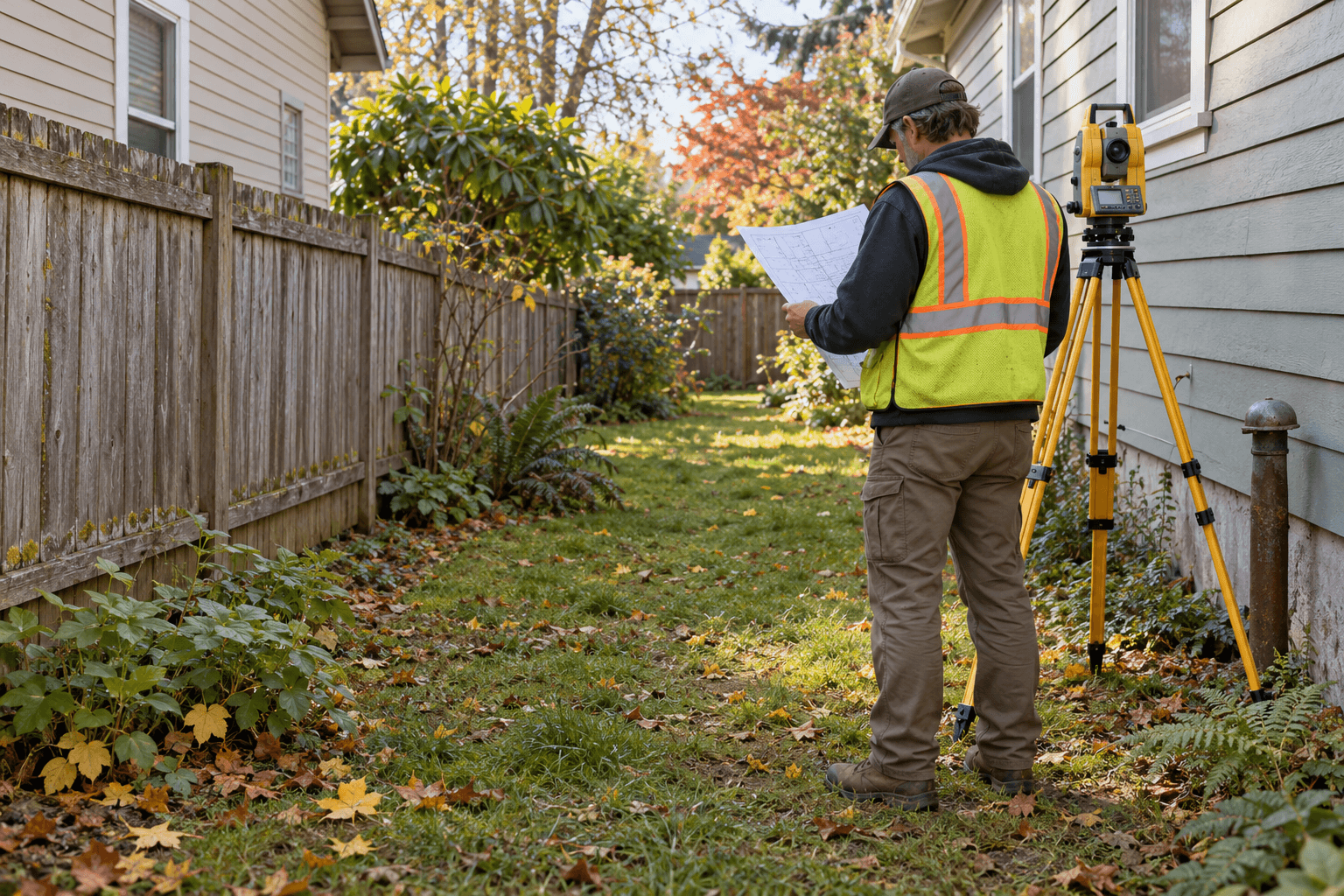
You cannot settle ownership of an oil tank near a Salem property line by looking at the fence or the house it once heated. Start by confirming the tank's position, having a licensed land surveyor establish the boundary, and gathering the relevant property documents. An Oregon real-estate attorney can then advise on disputed ownership, access rights and responsibility for costs.
Before booking removal, tell the tank contractor that two properties may be involved. A side-yard tank might sit close to a boundary, while the equipment needed to investigate it would enter another yard. Both owners need a clear description of the proposed work. Keep the question of permission to enter separate from any agreement about who pays.
Plan tank locating near a property boundary
Describe the suspected tank position, available survey records and access arrangements. Request a tank-locating quote; boundary determinations and ownership advice belong with your surveyor and attorney.
Establish the tank position and the boundary separately
Ask the tank-locating provider to record the suspected tank footprint, visible fuel-system features and limits of the investigation. Ask the surveyor to relate those findings to the property boundary. Describe the problem to both professionals before their visits so they can agree on useful drawings, measurements and reference points. A scan report that marks an object beside a fence does not explain whose land contains it.
The Marion County surveyor FAQ explains that surveyors combine recorded surveys and deed information with physical evidence on the ground. Bring the documents you have to that review. If you disagree with a finding, identify the record or evidence you want the surveyor to consider, rather than shifting a marker to match your understanding of the yard.
Leave survey monuments and field markings undisturbed. Photograph them from a position where you have permission to stand and keep the original report with its date. For the initial tank investigation, our buried tank discovery guide explains the broader locating process. Here, the additional task is getting the tank findings and boundary evidence onto a drawing that both professionals can interpret.
Gather records for both properties
Create a folder for each address and a separate folder for documents that cover both parcels. Include the current deeds, title documents you hold, recorded surveys and any subdivision or partition maps. Add earlier tank reports and heating-system records. Note where each document came from so the surveyor or attorney can request a complete copy if your version omits a page or attachment.
If someone says the two homes once shared a larger lot, ask for the record behind that account. Write down the date of the claimed division and compare it with the dates in the tank paperwork. Treat a former owner's recollection as a lead to investigate. Do not change an old report's address or draw a new boundary on it to make the records agree.
Our article on Salem tank property records covers the search for heating and tank history. For a boundary question, add a short note to each result explaining which property it describes and what remains uncertain. A receipt showing a fuel delivery may help identify the house served, but ask your attorney what weight it carries in the ownership question.
Get advice on ownership before agreeing to a bill
The Oregon surveyors' ownership guidance distinguishes locating boundaries from deciding disputed property ownership. A surveyor documents the boundary evidence; courts resolve ownership disputes that require a legal decision. Give an Oregon attorney the survey, tank-location report and relevant title documents if the neighbors disagree. Ask which questions the available evidence answers and which need further work.
You may need advice even when everyone wants the tank gone. One owner might offer access while another proposes paying for a locate. Before signing, ask the attorney how to document that limited arrangement and whether the proposed wording addresses the intended work. Do not assume that paying the first invoice settles responsibility for later excavation, contamination or restoration.
Give the contractor the practical decisions they need: who can authorize each stage, who receives the estimate, and whom to contact if the findings change the scope. Avoid asking the crew to resolve the dispute at the gate on the morning of the visit. If the owners have not settled a necessary access question, tell the contractor before they schedule equipment or laboratory work.
Arrange permission for each stage of investigation
Oregon DEQ's heating oil tank guidance tells buyers to obtain owner permission before tank-search activities. For a two-property investigation, ask the provider to identify every area they need to enter and agree on access before the visit. Ask the surveyor to explain the rules that apply to their own entry; do not treat a survey visit as permission for a tank crew to excavate.
Discuss the specific visit instead of asking a neighbor for open-ended access. A nonintrusive locate, soil sampling and tank removal involve different work. Ask the contractor to mark the proposed working area and describe any later access they expect to request. If the current permission covers only the first visit, keep later work out of that appointment until the necessary arrangements are in place.
- Entry arrangements: identify the gate or route, agreed dates, site contact and any pets or locked areas the crew needs to account for.
- Work limits: describe the activities covered, the parts of each property involved and the person who can authorize a change.
- Surface protection: ask how the crew proposes to protect paving, planting and fences, and who will discuss any restoration work.
- Information sharing: agree who receives the location drawing, photographs and reports so both owners can work from the same findings.
Use a two-property evidence checklist
Before a joint call, give each item below a document name, date and contact person. Mark missing information as unknown. This gives the surveyor, tank provider and attorney a short list to work through without asking each neighbor to repeat a different version of the history. Keep the original files alongside your notes.
- Property identification: both street addresses, parcel identifiers and the names of the people authorized to discuss access.
- Boundary evidence: current deeds, available title documents, recorded survey references and any unresolved differences the surveyor has identified.
- Tank evidence: the locating report, suspected footprint, visible pipes, photographs and any areas the provider could not inspect.
- Historical connections: earlier parcel maps, heating records and tank documents, with the address and date shown on each original.
- Proposed work: a drawing of the investigation area, access route, surface restrictions and tasks that still need permission.
- Decision record: the next question to resolve, who will answer it, who receives the answer and the work that depends on it.
Ask the professionals to explain uncertainty in their own reports. For example, request clarification if the tank provider could not inspect beyond a fence or if a document refers to an earlier parcel configuration. Do not turn an approximate location into a precise boundary distance in your summary. Preserve the distinction between a field observation, a reported history and a professional conclusion.
Keep a leak response moving while ownership is unresolved
A payment disagreement should not be the reason nobody contacts the environmental professional about a discovered leak. DEQ's homeowner guidance requires notification within 72 hours of discovering a heating oil tank leak and cleanup to its standards. Contact DEQ and a licensed heating oil tank service provider about the findings; explain that the location or access involves another property. Do not wait for a private ownership agreement before seeking that direction.
Keep the environmental findings with the two-property file, including who reported the release and any reference number supplied. Ask the provider what access they need for the next investigation step. Your attorney can advise on the private cost dispute while the environmental professional addresses the release. A fence-side tank location alone does not establish the source or extent of contamination on either property.
Request the tank work you can authorize
When requesting buried oil tank locating, explain that the suspected tank is close to a private property line. State which areas the provider can access, which survey documents you have and what you need the locating report to show. If you are comparing visits, our tank sweep planning article helps you ask about the investigation scope.
After the professionals reconcile the location evidence and you address the access questions, ask for the next stage in writing. That may be further investigation rather than removal. Request a scope that names the work area, deliverables and exclusions, and ask what would trigger another discussion with the neighboring owner. Keep the survey and legal advice separate from the tank contractor's quotation so each person stays responsible for the work they agreed to provide.