Part of: Oil Tank Soil Contamination in Salem, OR: 2026 DEQ Cleanup Guide
A suspected heating oil leak feels like an emergency, and the early hours do matter, but the right response is methodical rather than panicked. Heating oil is not explosive the way gasoline is, so the immediate risk is environmental and structural, not a fireball. The priorities are stopping further release, ventilating, and getting a licensed provider on the phone.
This page covers the immediate steps. What DEQ requires afterwards, and what a confirmed release costs the property owner in Salem, is a longer story.
The first few hours
If you suspect an active leak, work through these in order. None of them require a contractor yet; they are about limiting the spread and keeping the house safe to be in.
- 01Stop using the oil system. Shut off the furnace so it stops drawing fuel through a compromised line.
- 02Ventilate. Open basement and ground-floor windows. Oil vapor is unpleasant and, in a closed space, a respiratory irritant.
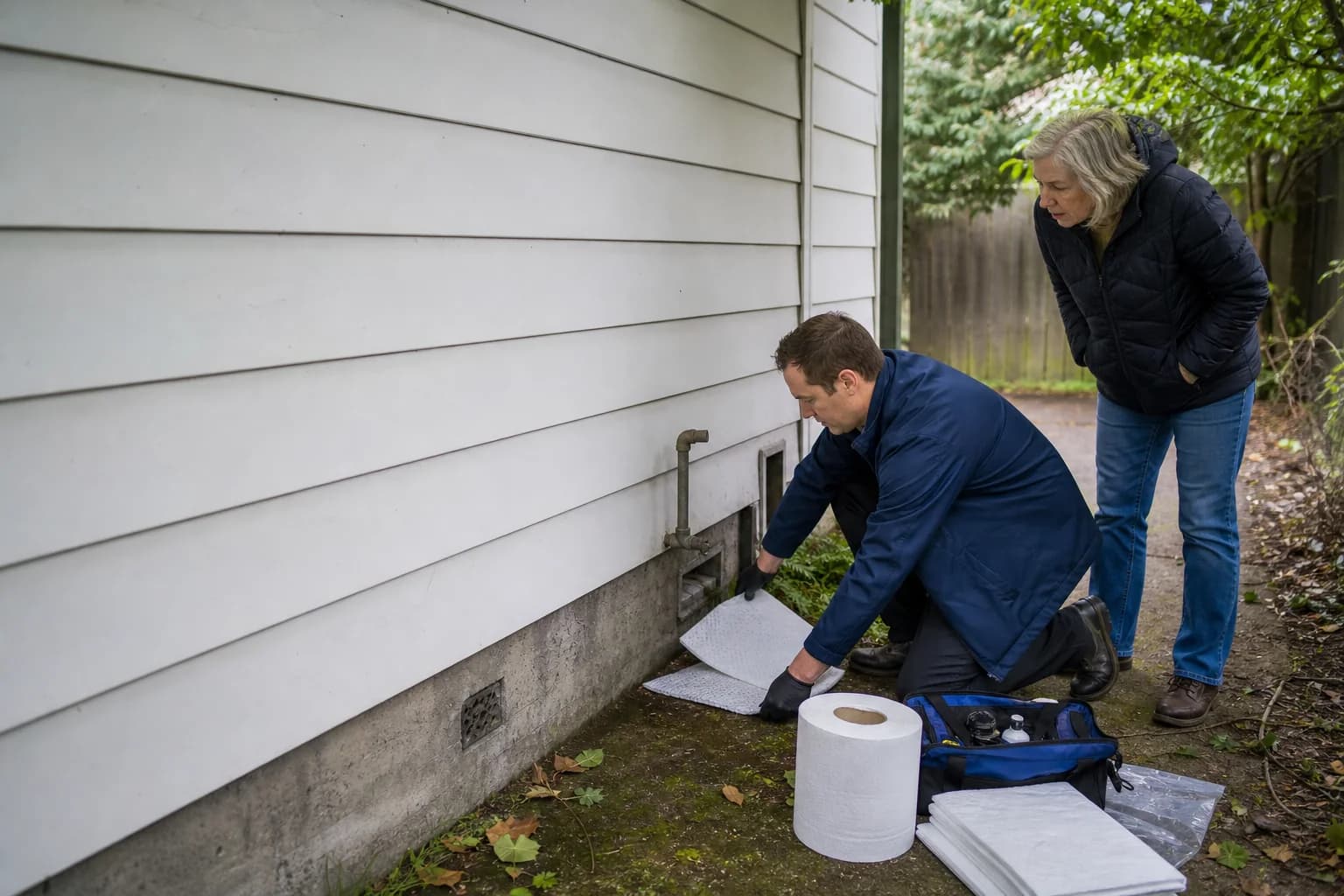
- 03Contain what you can see. If there is pooled oil indoors, absorbent material (kitty litter, rags) limits the spread to flooring. Do not hose it anywhere.
- 04Keep it out of drains and storm water. The one hard rule: never flush oil into a sink, floor drain, or yard drain. That turns a soil issue into a water issue and a much bigger DEQ matter.
Who to call, and in what order
For a residential heating oil release, the call list is short:
- 01A DEQ-licensed service provider. The first call. They assess, contain, and start the documented response. This is who actually handles it.
- 02Oregon Emergency Response System, for a large or spreading release. A small contained seep does not need a state hotline call, but oil reaching a waterway, a storm drain, or a neighboring property does.
- 03Your insurer, for the record. Most homeowner policies carry a pollution exclusion that captures a release from a tank you own, but wording varies by carrier, so report it, ask for the coverage position in writing, and let the file exist either way.
Watch out
Do not call a general handyman or a non-licensed excavator to "just dig it out fast." Unlicensed emergency work creates a release record with no compliant documentation, which means no certification DEQ will register and a file that stays open until someone redoes the work properly. The faster-and-cheaper option here is the expensive one.
What happens after the first day
Once a licensed provider is engaged, a confirmed release moves into a defined process: sampling to map the extent, excavation and disposal of contaminated soil, confirmation samples, and a Cleanup Report that ends in a DEQ No Further Action letter.
The cost is the owner's. Oregon has no reimbursement fund, insurance pool, or grant for residential heating oil cleanup, and DEQ states that the current owner of the property is responsible for any necessary cleanup even if the leak happened before he or she bought the property. What varies is the pathway: a site that meets DEQ's generic remedy conditions closes without site-specific risk characterization, and a site that does not falls to a risk-based cleanup, which is a legitimate closure but a more expensive one.
The cleanup levels, sampling panels, and the conditions a site has to meet to qualify for the cheaper route are worth reading before you accept a quote.
Ready to schedule a Salem-area decommissioning?
Free site survey, fixed-price written quote, full DEQ closeout documentation. Most surveys scheduled within 48 hours.
Request a Written QuoteEmergency: Common Questions
Is a heating oil leak dangerous to be around?
Do I have to report a small oil leak in Salem?
Will my homeowner insurance cover an oil leak cleanup?
How fast does a leak need to be dealt with?
Related services and references
Guide
Salem Soil Contamination and DEQ Cleanup
The full cleanup process and what it costs the owner.
Guide
Is My Buried Salem Oil Tank Leaking?
Catching a leak before it becomes an emergency.
Guide
Oregon DEQ Oil Tank Rules
What DEQ requires once a release is confirmed.
Guide
Complete Salem Oil Tank Removal Guide
How decommissioning prevents this scenario.
Service
Soil Testing & Contamination Cleanup
The licensed cleanup workflow.