
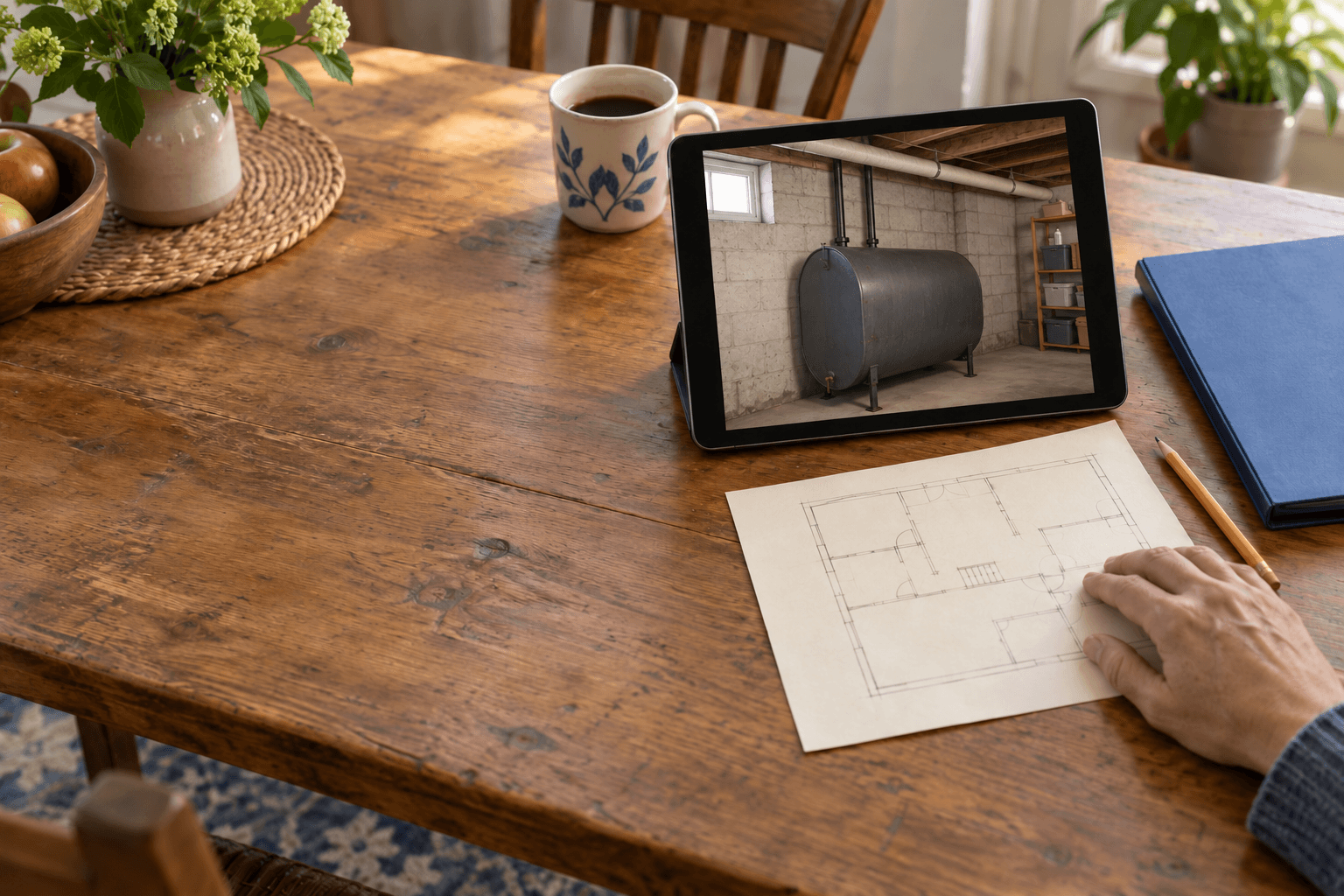
Before booking oil tank removal in Salem, tell the contractors about any suspected asbestos near the tank, boiler, piping or planned access route. Arrange an assessment of the materials the work could disturb, then have the asbestos professional and tank contractor agree on the order of work. A tank-removal quote needs to identify who handles that separate assessment and any resulting asbestos work.
You can start by gathering old reports and describing the proposed project. Leave suspect insulation and debris alone. The useful outcome is a shared scope: which areas the inspector assessed, what the asbestos provider will address, and what the tank crew needs before entering or changing the space.
Start with the work area, not a photo diagnosis
A white pipe covering or an old boiler jacket does not tell you whether asbestos is present. EPA's home asbestos guidance explains that appearance alone generally cannot identify it and recommends trained, accredited professionals for sampling. Do not peel back insulation or collect a fragment to help someone identify it online.
Tell the assessor what the crews intend to do. Include the tank position, proposed equipment route, nearby heating pipes and any walls or ceiling areas the project may affect. A contractor carrying equipment through a low doorway may need a different access review from one working beside the tank. Ask the team to include both the work location and the route in its discussion.
Share existing inspection reports before the visit. An old report may cover a different room or an earlier renovation. Ask the inspector whether it addresses the materials and locations involved in this project, and what remains outside its scope. Keep those limits with the report instead of reducing the findings to a verbal statement that the basement was checked.
// Featured service
Basement Oil Tank Removal
Removal of indoor heating oil tanks from Salem basements, garages and crawlspaces. We pump out the oil and sludge, make the tank safe, cut it into sections that fit up the stairs, recycle the steel, and close off the old fill pipe so nobody delivers oil into a tank that is gone.
Confirm the Oregon survey requirements for your project
Oregon DEQ's asbestos survey requirements state that residential buildings constructed before January 1, 2004 need an accredited inspector's survey before renovation or demolition. DEQ describes an exception for owner-occupants doing their own single-family home renovation; hiring contractors is a different situation. Its definition of renovation includes changes to pipes, ventilation systems and insulating materials. Ask DEQ or your accredited inspector how the proposed scope fits these requirements.
DEQ also describes an alternative involving treating all affected materials as friable asbestos and using a DEQ-licensed abatement contractor. Have the asbestos professional explain the applicable route before you approve work. Do not treat that alternative as permission for the tank crew to handle unknown insulation. Where a survey is required, DEQ says to keep a copy of the report on site during the work.
Provide the home's construction information and the proposed work description when making the inquiry. State whether the project involves tank removal alone, appliance removal, new heating equipment or a wider remodel. Ask for the answer against that scope, and revisit it if the contractor later proposes opening another wall or changing the equipment route.
Give the inspector and each contractor a defined job
Ask the inspector to identify the assessment area and the deliverable you will receive. Ask any asbestos abatement provider to identify its qualifications, the material locations included in its proposal and the work excluded from that price. Request evidence of the accreditation and licensing appropriate to the assigned work; an oil-tank credential does not establish an asbestos qualification.
EPA recommends separating the inspection firm from the firm performing asbestos repairs or removal to reduce conflicts of interest. If one project coordinator arranges several providers, find out which business performs each role and who receives each report. Keep their names and direct contacts with the quotations so you can resolve a scope question before crews arrive.
The tank contractor should describe the tank and fuel-system work it will undertake, including any dependency on the asbestos provider finishing first. The heating contractor should describe the equipment it will retain, disconnect or replace. Ask both to review the assessment information rather than expecting the homeowner to decide whether a particular pipe covering affects their work.
Use the broader replacement and conversion guide for the overall heating change. This asbestos coordination belongs in that schedule as a specific task with an assigned provider, a defined work area and a condition for the next crew to proceed.
Share the findings before crews price and schedule the work
Give the same report version and project drawing to the inspector, asbestos provider, tank contractor and heating installer. Ask each company to acknowledge the information relevant to its scope. Send revised information when the team changes the design, rather than relying on a discussion that took place before the latest drawing.
OSHA's asbestos hazard communication rules address sharing information about known or presumed asbestos with employers working in or near affected areas. Your contractors must establish the Oregon workplace requirements that apply to their work. For your project planning, ask who distributes the findings, who explains remaining restrictions and who receives any new information during the job.
Avoid booking overlapping crews until the responsible professionals confirm that the proposed arrangement works. Ask the asbestos provider which areas other trades must avoid and how it will communicate the end of those restrictions. Have the tank contractor identify who accepts that handoff before sending its crew. A calendar appointment alone does not answer those questions.
Keep a scope and handoff sheet
Use one short project sheet alongside the actual survey and contracts. You can fill in contact details and document references; leave material identification, work methods and completion decisions to the qualified professionals. For each task, record the following information.
- Assessment coverage. Name the inspector, record the report date and list the rooms or material locations covered. Attach the drawing used for the project. Identify unresolved locations so the next contractor can ask about them before work starts.
- Asbestos scope. Name the provider and reference the accepted proposal. Record which locations it will address, what it will leave in place and which notifications, disposal records or completion documents it has included in its scope.
- Tank and heating scope. Identify the provider for each part of the work. Record the equipment staying and leaving, the proposed access route and any task that depends on the asbestos provider completing an earlier stage.
- Handoff condition. Name the person who confirms completion of the asbestos scope and supplies the agreed documentation. Record who at the next company reviews it and authorizes that company's work to begin.
- Changed conditions. Agree on the contact and approval process if a crew finds another suspect material or needs to work outside the assessed area. Record who revises the scope, price and schedule before the affected work resumes.
Give everyone the current sheet and keep the earlier versions in the project file. A dated revision helps distinguish an agreed change from an assumption made during a phone call. Include a direct number for the person coordinating access, especially if you will not be at the property during the work.
Allow time for assessment and a changed scope
Ask each provider to identify the tasks that control its start date. These might include receiving the survey, agreeing on corrective work, completing applicable notifications or reviewing completion documents. Request a project-specific schedule after those dependencies are known. Avoid treating a general tank-removal duration as the duration of a combined asbestos and heating project.
Discuss how an asbestos-related delay affects the heating change before anyone retires the existing equipment. The oil-to-heat-pump guide covers the wider conversion sequence. Ask the heating installer and tank contractor to agree on the point at which they can commit to the changeover, and who contacts you if that point moves.
If the job includes piping left from an earlier conversion, share the findings from the old oil line assessment with the asbestos inspector. Confirm that both professionals understand the proposed work around those lines. Keep fuel-system identification and suspect building-material assessment as separate entries so neither disappears inside a general demolition allowance.
Collect the completion records before the next stage
Before accepting the asbestos proposal, ask what evidence the provider will supply at completion and whether the project needs a separate inspection or monitoring service. Have the responsible professional explain any applicable completion criteria. Do not use the absence of visible dust, a clean-looking room or the crew's departure as your own clearance decision.
Keep the survey, accepted scopes, change orders and completion documents together. Ask the provider to identify any asbestos-containing material remaining in place and the instructions the next trade needs. If the later work changes location or affects retained material, return to the professionals for a revised assessment before continuing.
When requesting basement oil tank removal, mention suspected asbestos at the first inquiry and share any existing report. Ask for the tank contractor's scope and the information it needs from the asbestos provider. Resolve who assesses the materials, who handles any asbestos work and who confirms the handoff before you commit to the removal date.