
Oil Tank Removal in Salem, OR
Salem's 60-block grid wraps the State Capitol with a deep core of pre-war housing and 1948-1968 NESCA tract development radiating north and east. Government employment keeps real-estate turnover steady year-round, and most decommissioning calls come from one of three triggers: pre-listing prep, NW Natural conversion follow-ups through Lansing and Hayesville, or buyer's lender flagging an unresolved UST during underwriting. Certifications go to DEQ as soon as the lab results are signed off rather than waiting on a batch.
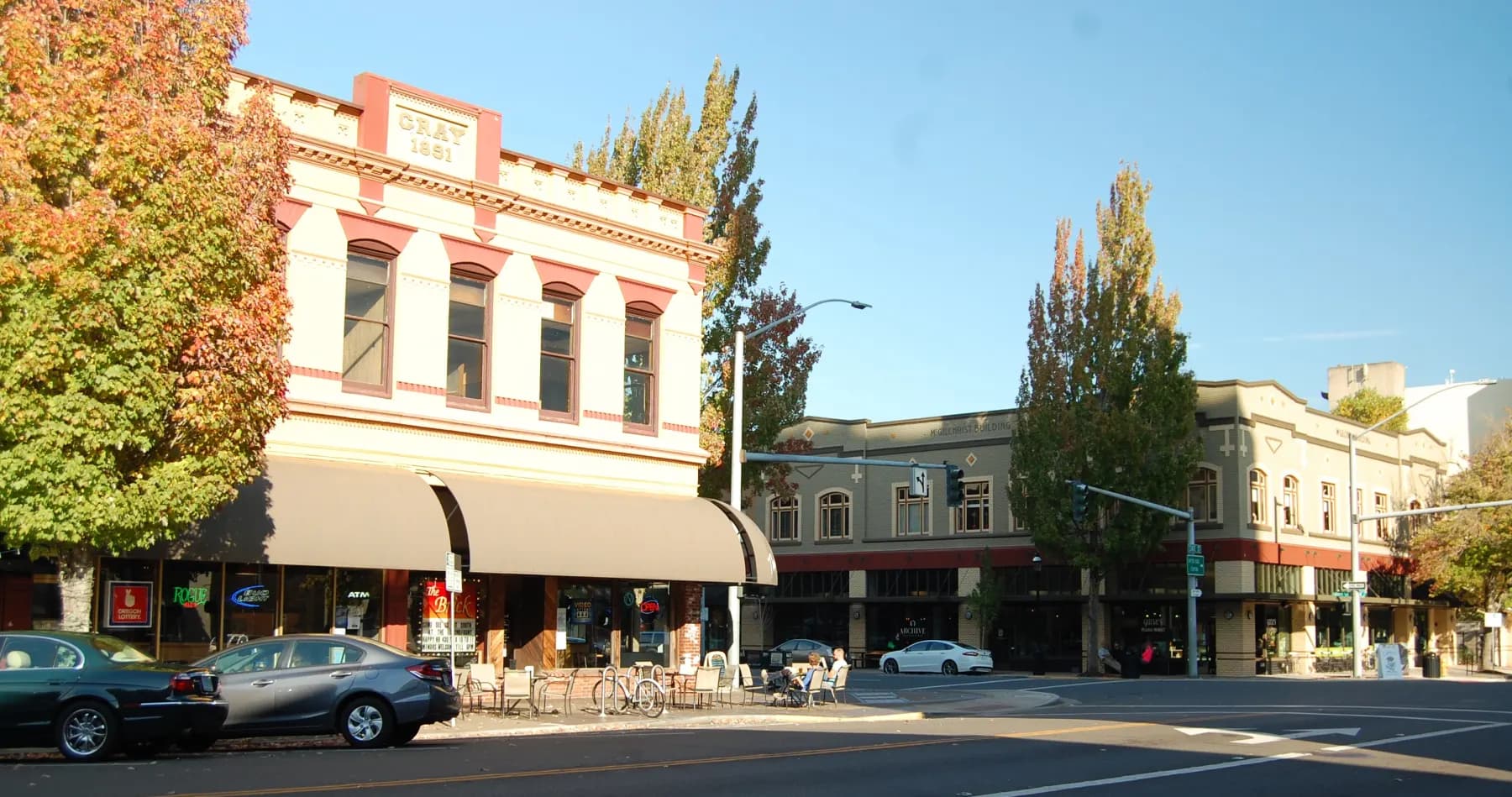
Photo: Roman Eugeniusz, CC BY-SA 3.0, via Wikimedia Commons

Salem Tank Decommissioning Across the Capitol Grid and Beyond
State capital with a heavy government employment base (Oregon State Government, Salem-Keizer Public Schools, Salem Health). Real-estate turnover has been steady through 2024-2026, and lender scrutiny of UST disclosures is what drives most homeowner calls.
Tank conditions our crews see most often in Salem: pre-1970 buried steel USTs (500 to 1,000 gal), basement 275-gal Granby ASTs, post-conversion abandoned tanks (oil → NW Natural), and real-estate-driven decommissioning. Local layout shapes access and staging: I-5 to the east; OR-22 (Mission/Center) east-west; River Road and Wallace Road carry West Salem traffic; Lancaster Drive runs the east-side commercial corridor.
Need help with your Salem oil tank?
Tell us about your tank, property and planned work using the quote form on this page.
Services available in Salem
Underground Oil Tank Removal in Salem
Full decommissioning of buried heating oil tanks in Salem under the Oregon DEQ heating oil tank rules. We locate, pump, clean, cut, lift and sample, then file the certified report so DEQ registers it and sends you the letter for the property file.
Most Salem-proper buried tanks are 500- or 1,000-gallon bare-steel cylinders installed between 1948 and 1968, the NESCA tract era. Older pre-war stock east of the Capitol skews 500-gallon; mid-century ranches are typically 1,000-gallon with wide-open access and single-day digs.
Get a quote// 02Buried Oil Tank Locating in Salem
Find out whether a Salem property has a buried heating oil tank before you buy or sell. We sweep the yard with metal detection and a magnetic locator, probe to confirm, and give you a written result you can hand to an agent or lender.
Get a quote// 03Aboveground Oil Tank Removal in Salem
Removal of outdoor aboveground heating oil tanks on pads or legs at Salem-area homes: pump-out, disposal, steel recycling, and a check of the ground underneath. Indoor basement tanks have their own service.
Salem basements with 275-gallon Granby tanks are routine half-day work, particularly common in the older NESCA and South Gateway housing stock. Plasma-cut sections sized for the doorway, scrap to a Marion County recycler.
Get a quote// 04Basement Oil Tank Removal in Salem
Removal of indoor heating oil tanks from Salem basements, garages and crawlspaces. We pump out the oil and sludge, make the tank safe, cut it into sections that fit up the stairs, recycle the steel, and close off the old fill pipe so nobody delivers oil into a tank that is gone.
Get a quote// 05Oil Tank Abandonment in Place in Salem
Decommissioning a buried heating oil tank without digging it out. We pump and clean the tank, fill it with compacted inert material, sample the soil, and file the certified report so DEQ registers it the same way as a removal.
Salem 1970s-80s remodels (additions, garage extensions, concrete patios) often sit over original tanks. When the structure isn't worth removing, OAR 340-177-0100(2)(b) abandonment in place is the regulatory path: CLSM flowable slurry through the existing fill pipe, soil samples from accessible sides.
Get a quote// 06Soil Testing & Contamination Cleanup in Salem
Soil testing to find out whether a heating oil tank leaked, and cleanup when it did. Samples go to an accredited lab for diesel-range hydrocarbons; a confirmed release is reported to DEQ and cleaned up under the route the site qualifies for, through to a closed DEQ file.
Salem's alluvial Willamette Valley soils allow lateral plume migration, similar to Bethel rather than the contained vertical plumes of South Hills clay. Releases here can spread under foundations or storm drains; our sampling grid is wider on the sidewalls than on hillside jobs.
Get a quote// 07Emergency Oil Tank Leak Cleanup in Salem
Rapid response to a leaking heating oil tank or spill at a Salem-area home. We stop and contain the release, report it to DEQ inside the 72-hour window, and take the cleanup through to a registered report and a closed DEQ file.
Get a quote// 08Missing Oil Tank Paperwork in Salem
No DEQ paperwork for your oil tank and a sale coming up? We search the Oregon DEQ heating oil tank records and the separate local permit trail, tell you in writing what the property file shows, and then fix the gap: registering an old decommissioning, re-testing the soil, or closing the tank properly.
Get a quoteOil tank removal challenges specific to Salem
Oregon's capital, a 60-block grid of pre-war homes wrapped around the State Capitol, with mid-century neighborhoods radiating north and south.. The issues our crews see most often here:
Buyer's lender flagging "unknown UST" two weeks before closing, by far the most common trigger in our call volume
NW Natural service expansions through Lansing, Hayesville, and Sunnyslope leaving abandoned-but-unclosed tanks behind
Pre-1990 sand-fill closures that don't satisfy current OAR 340-177 requirements and need re-decommissioning at sale
Tight downtown lots where the excavator has to access through a single gate; staging matters more than dig speed
Tank conditions we see in Salem
Pre-war housing concentrated near Bush's Pasture Park, Willamette University, and the Capitol Mall. Mid-century ranches dominate NESCA, Hayesville, and South Gateway. Newer subdivisions in Cordon Road and South Salem hills mostly post-date oil-heat era.
Local context: Salem
I-5 to the east; OR-22 (Mission/Center) east-west; River Road and Wallace Road carry West Salem traffic; Lancaster Drive runs the east-side commercial corridor.
Why hire us in Salem
Salem tank patterns
Most jobs here involve pre-1970 buried steel USTs (500 to 1,000 gal) or basement 275-gal Granby ASTs. Knowing the era and configuration before the truck arrives saves hours on locate, dig, and lift.
Local conditions
Pre-war housing concentrated near Bush's Pasture Park, Willamette University, and the Capitol Mall. Mid-century ranches dominate NESCA, Hayesville, and South Gateway. Newer subdivisions in Cordon Road and South Salem hills mostly post-date oil-heat era.
Salem-specific challenges
Buyer's lender flagging "unknown UST" two weeks before closing, by far the most common trigger in our call volume.
Documentation that closes the file
Certified Decommissioning Report submitted to DEQ once the lab results are in. DEQ then issues the letter registering it, and that letter is what shows up clean in the next buyer's due diligence.
Areas around Salem
Crews dispatch from Salem across the surrounding Marion–Polk corridor.
Salem Oil Tank Removal in Salem: common questions
Who issues the building permit for a Salem tank decommissioning?
How does the DEQ Western Region office on Fairview Industrial Drive process Salem reports?
Can you handle a Salem rental property under tenant occupancy?
Schedule Your Salem Tank Decommissioning
From a 1920s home near Bush's Pasture Park to a 1958 NESCA ranch to a Sunnyslope split-level, every Salem job runs the same path: locate, permit, decommission, sample, and file the Decommissioning Report DEQ needs to close the property file.
Call (503) 505-9254