
Oil Tank Removal in Albany, OR
Albany holds the Monteith and Hackleman districts and one of Oregon’s densest concentrations of pre-1915 housing, 25 minutes south of Salem. That housing converted to oil heat and off it again decades before most current owners bought, which is why Albany tanks so often turn up under a porch or a driveway during a sale rather than being known about in advance.
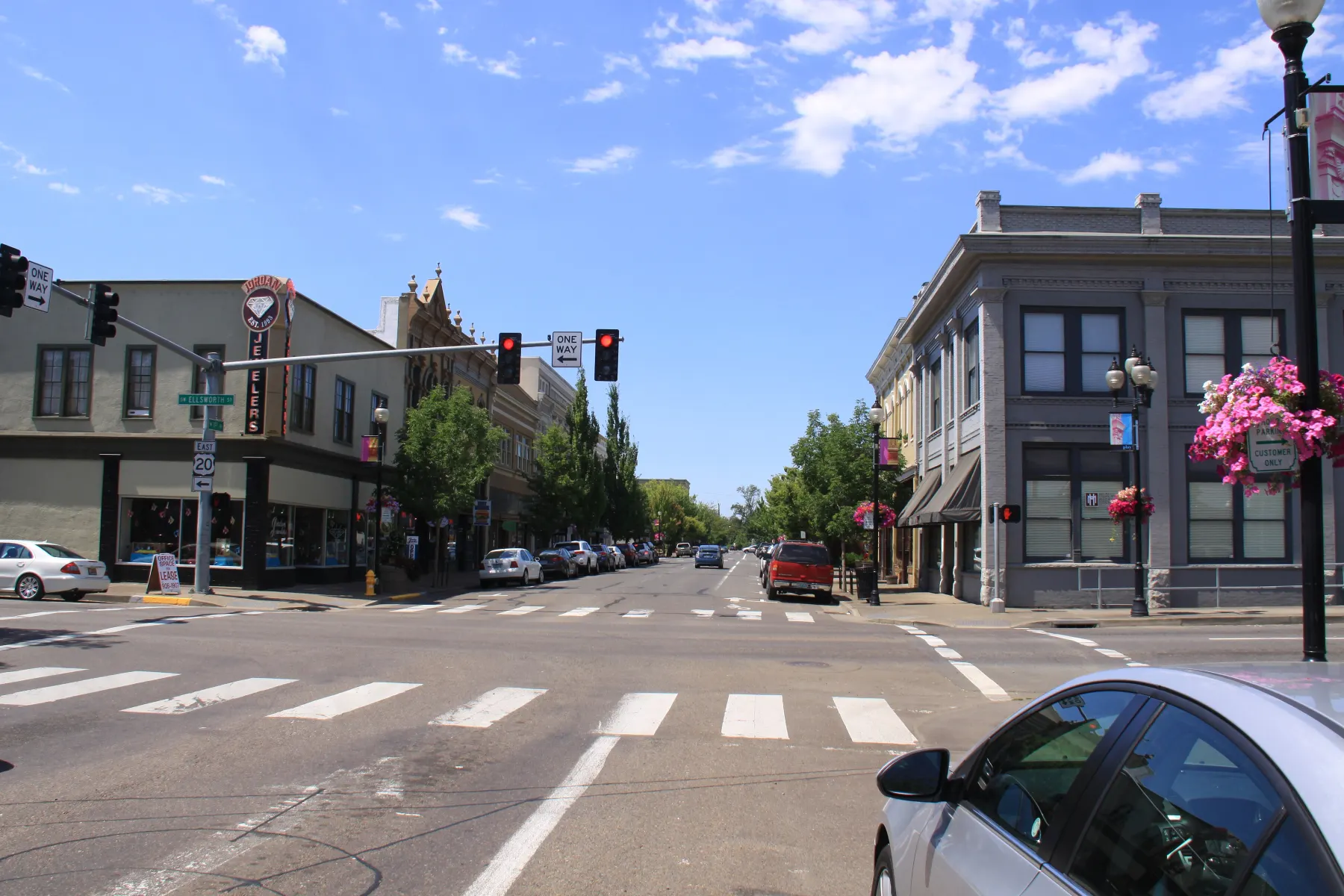
Photo: Edfallere, CC BY-SA 4.0, via Wikimedia Commons

Albany Historic-District and Mid-Century Tank Decommissioning
Around 56,000 residents and the largest city we cover outside Salem. The historic districts are the defining feature for tank work: a house built in 1900 that converted to oil heat in the 1930s or 1940s and off it again in the 1960s or 1970s can have a buried tank nobody in the current chain of ownership has ever seen, under a porch, a driveway, or an addition built since.
Tank conditions our crews see most often in Albany: pre-1915 historic-district tanks (500 gal common), mid-century residential USTs (1,000 gal), basement and crawl-space ASTs in the historic stock, and tanks under a century of additions and porches. Local layout shapes access and staging: I-5 exits 233 and 234; US-20 west to Corvallis and east toward the Cascades; OR-99E north toward Salem. Roughly 25 minutes from Salem.
Services available in Albany
Underground Oil Tank Removal in Albany
Full decommissioning of buried heating oil tanks in Salem under the Oregon DEQ heating oil tank rules. We locate, pump, clean, cut, lift and sample, then file the certified report so DEQ registers it and sends you the letter for the property file.
Albany buried tanks skew older and smaller than the Salem metro average, with 500-gallon installations common in the historic districts and 1,000-gallon cylinders in the mid-century stock. Locating is frequently needed because a century of construction has covered the evidence.
Get a quote// 02Buried Oil Tank Locating in Albany
Find out whether a Salem property has a buried heating oil tank before you buy or sell. We sweep the yard with metal detection and a magnetic locator, probe to confirm, and give you a written result you can hand to an agent or lender.
Get a quote// 03Aboveground Oil Tank Removal in Albany
Removal of outdoor aboveground heating oil tanks on pads or legs at Salem-area homes: pump-out, disposal, steel recycling, and a check of the ground underneath. Indoor basement tanks have their own service.
The historic stock has a high share of basement and crawl-space tanks reached through narrow period stairwells, which usually means cut-down sectioning to get the tank out rather than lifting it whole.
Get a quote// 04Basement Oil Tank Removal in Albany
Removal of indoor heating oil tanks from Salem basements, garages and crawlspaces. We pump out the oil and sludge, make the tank safe, cut it into sections that fit up the stairs, recycle the steel, and close off the old fill pipe so nobody delivers oil into a tank that is gone.
Get a quote// 05Oil Tank Abandonment in Place in Albany
Decommissioning a buried heating oil tank without digging it out. We pump and clean the tank, fill it with compacted inert material, sample the soil, and file the certified report so DEQ registers it the same way as a removal.
Porches, additions, and driveways built over original tank locations make abandonment a common and sometimes the only sensible path in the Albany historic districts. Same DEQ filing, same sampling, no disruption to the structure above.
Get a quote// 06Soil Testing & Contamination Cleanup in Albany
Soil testing to find out whether a heating oil tank leaked, and cleanup when it did. Samples go to an accredited lab for diesel-range hydrocarbons; a confirmed release is reported to DEQ and cleaned up under the route the site qualifies for, through to a closed DEQ file.
Albany sits at the Willamette and Calapooia confluence, and low-lying parcels near either river can carry a high winter water table. Where a release has reached groundwater the pathway is tested as part of the standard panel rather than as an upcharge.
Get a quote// 07Emergency Oil Tank Leak Cleanup in Albany
Rapid response to a leaking heating oil tank or spill at a Salem-area home. We stop and contain the release, report it to DEQ inside the 72-hour window, and take the cleanup through to a registered report and a closed DEQ file.
Get a quote// 08Missing Oil Tank Paperwork in Albany
No DEQ paperwork for your oil tank and a sale coming up? We search the Oregon DEQ heating oil tank records and the separate local permit trail, tell you in writing what the property file shows, and then fix the gap: registering an old decommissioning, re-testing the soil, or closing the tank properly.
Get a quoteOil tank removal challenges specific to Albany
City of roughly 56,000 at the Willamette and Calapooia confluence, 25 minutes south of Salem, holding the Monteith and Hackleman historic districts and one of the densest concentrations of pre-1915 housing in Oregon.. The issues our crews see most often here:
Linn County and City of Albany permitting rather than Marion or Polk
Historic-district lots with a century of structures added over original tank locations
Pre-1915 houses that converted to oil and off it again, leaving undocumented tanks
Conservation considerations on historic-district properties affect restoration scope
Tank conditions we see in Albany
First Avenue and the downtown core beside the river; Pacific Boulevard as the commercial spine. The Monteith and Hackleman districts hold hundreds of Victorian and early-20th-century houses, with mid-century development spreading south and east.
Local context: Albany
I-5 exits 233 and 234; US-20 west to Corvallis and east toward the Cascades; OR-99E north toward Salem. Roughly 25 minutes from Salem.
Why hire us in Albany
Albany tank patterns
Most jobs here involve pre-1915 historic-district tanks (500 gal common) or mid-century residential USTs (1,000 gal). Knowing the era and configuration before the truck arrives saves hours on locate, dig, and lift.
Local conditions
First Avenue and the downtown core beside the river; Pacific Boulevard as the commercial spine. The Monteith and Hackleman districts hold hundreds of Victorian and early-20th-century houses, with mid-century development spreading south and east.
Albany-specific challenges
Linn County and City of Albany permitting rather than Marion or Polk.
Documentation that closes the file
Certified Decommissioning Report submitted to DEQ once the lab results are in. DEQ then issues the letter registering it, and that letter is what shows up clean in the next buyer's due diligence.
Areas around Albany
Crews dispatch from Albany across the surrounding Marion–Polk corridor.
Salem Oil Tank Removal in Albany: common questions
My Albany house is from 1905. Would it even have had an oil tank?
Does the historic district affect the work?
Albany is in Linn County. Does that change the DEQ side?
Schedule Your Albany Tank Decommissioning
From the Victorian streets of the Monteith and Hackleman districts to the mid-century blocks south and east, Albany jobs permit through the city or Linn County and close out with a Decommissioning Report filed with the Oregon DEQ Heating Oil Tank program.
Call (503) 505-9254